Category: Uncategorized
Small or medium rare cars
Rarity on four (or even three) wheels isn’t always the result of a purposely-planned creation from a bespoke source. Sometimes it happens because a child can’t make “vroom vroom” noises with a toy.
That’s how the pink Hot Wheels “Beach Bomb” rear-loader of 1969 became so rare, that only 2 are known to exist. It was made in the image of a VW Kombi, with 2 surfboards poking out the back. And it was pink, which wasn’t seen as a popular colour.
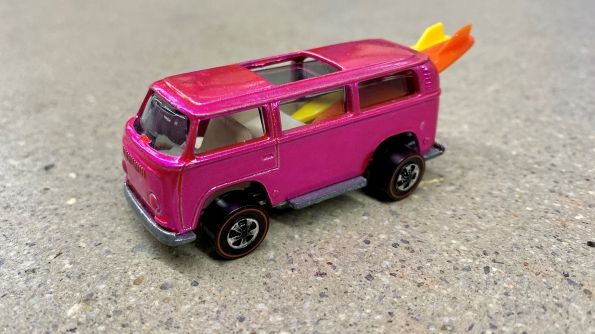
The Beach Bomb prototypes were found to be too top-heavy and prone to falling over while kids were letting them roll across the ground. Hot Wheels fixed this problem by going into production with a weighted model VW that carried the surfboards on its side.
The rear-loader prototypes were left with Hot Wheels employees – and one of the pink models ended up with a collector. It’s now valued at over $150,000.
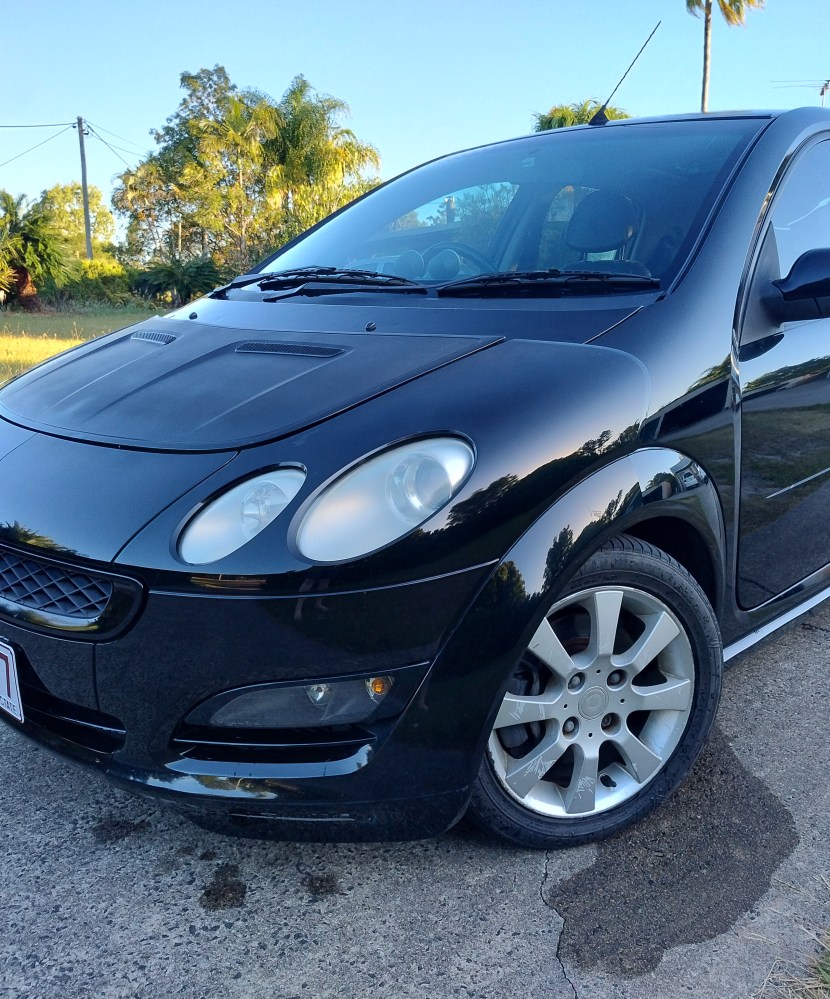
I currently have a rare car in my driveway – but it’s bigger than a toy, planted well on the road and it’s black. Only 1,284 Smart ForFour Brabus were made in the Netherlands in the production years of 2005 and 2006. I believe only 50 of them made it to Australia. In 2006, they cost an eye-watering $39,990.
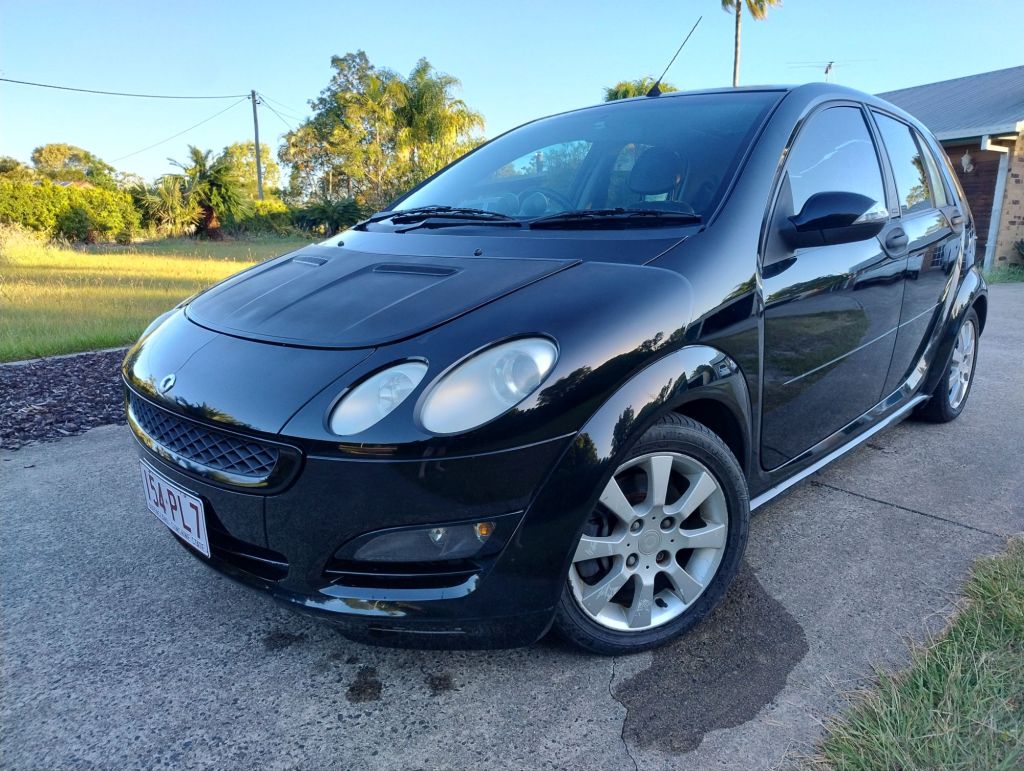
I only became aware of this sporty Smart through a friend’s enthusiasm for the model. This 2006 Smart ForFour Brabus manual turbo had 200,000 kilometres on the clock, plus a few minor hail dents on the very small area of the car that’s made of metal, not plastic.
It was a bit of a fixer-upper that also came with a damaged ForFour, so it wasn’t suitable for his garage. I felt it was worth buying, for the car’s rarity and its 177 horsepower.
Oh yes – it packs 130 kW. That’s because it’s based on the ’00s Mitsubishi Colt Ralliart, with some extra tuning by Brabus to get an extra 17 kW out of the 4G15T engine. It’ll hit 100km/h in around 6.9 seconds.
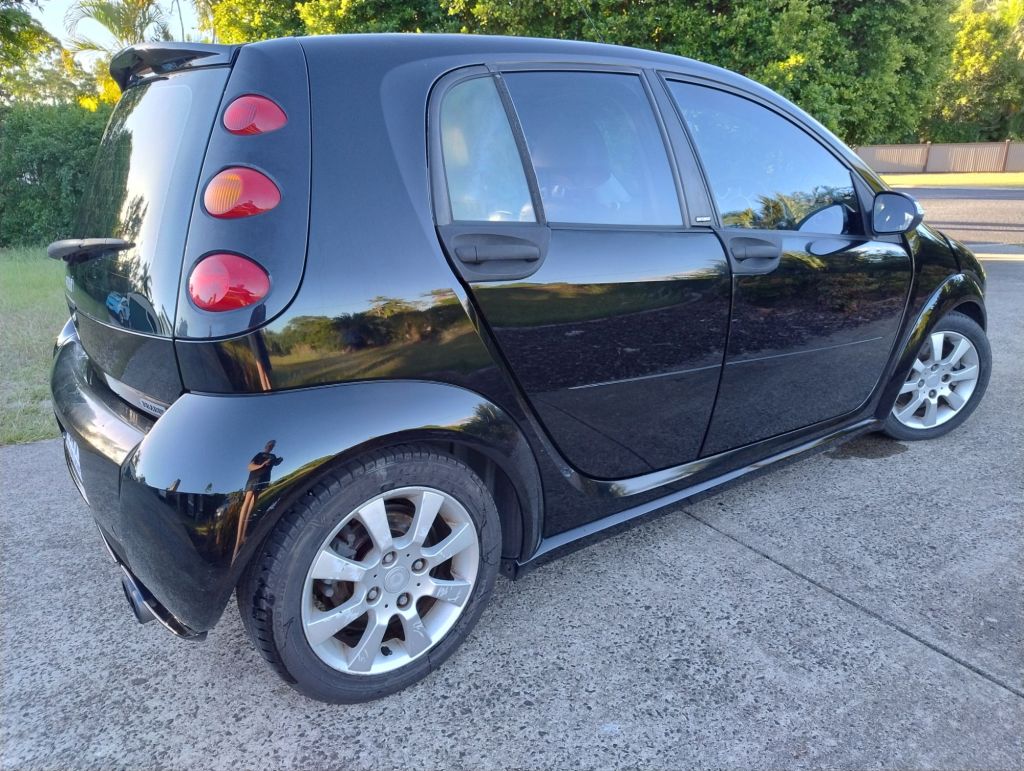
So I negotiated a price with the seller, had the wreck delivered on a trailer and awaited the delivery of the Brabus, with its plates taken off on arrival.
It has a passable exterior, but a nice interior. Leather seats have headrests embossed with the letter ‘B’. It’s equipped with air conditioning and an Alpine audio unit. The car has a clear plastic roof on the front half, and a glass roof on the back half. Interior blinds take the bite out of the sun.
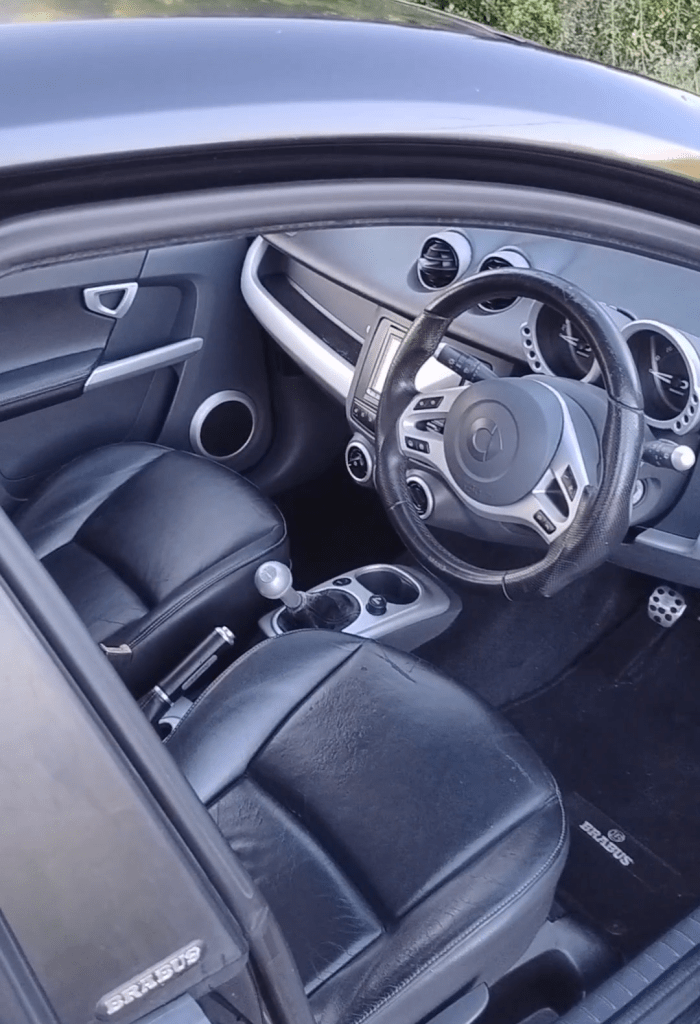
After spending quite a bit of money on a new timing belt, gaskets and suspension, the Brabus was back on the road – albeit on ‘regular’ rims, with the damaged Brabus rims on the wreck.
It’s great to drive, with 2nd and 3rd gears building up a head of turbo steam in a jaw-dropping way. It’s only carrying 1,090kg so the power-to-weight ratio is 8.4kg per kW.
I will be looking to sell it in 2026, so watch this space if you’re a bizarre Brabus fan.
My motoring history has a few rare beasts. It started with a Spanish SEAT Ibiza ..then a Polish FSM Niki ..a Daihatsu Copen ..a Ford Ka ..a Hyundai Grandeur ..a Ford Taurus ..a Ford Laser Lynx ..a Suzuki X-90 ..a Dodge Avenger ..and my ’85 Subaru Vortex XT
Just like that Hot Wheels Beach Bomb, this scrappy sports car from Brabus gives me the vroom-vrooms – but no surfboards needed.
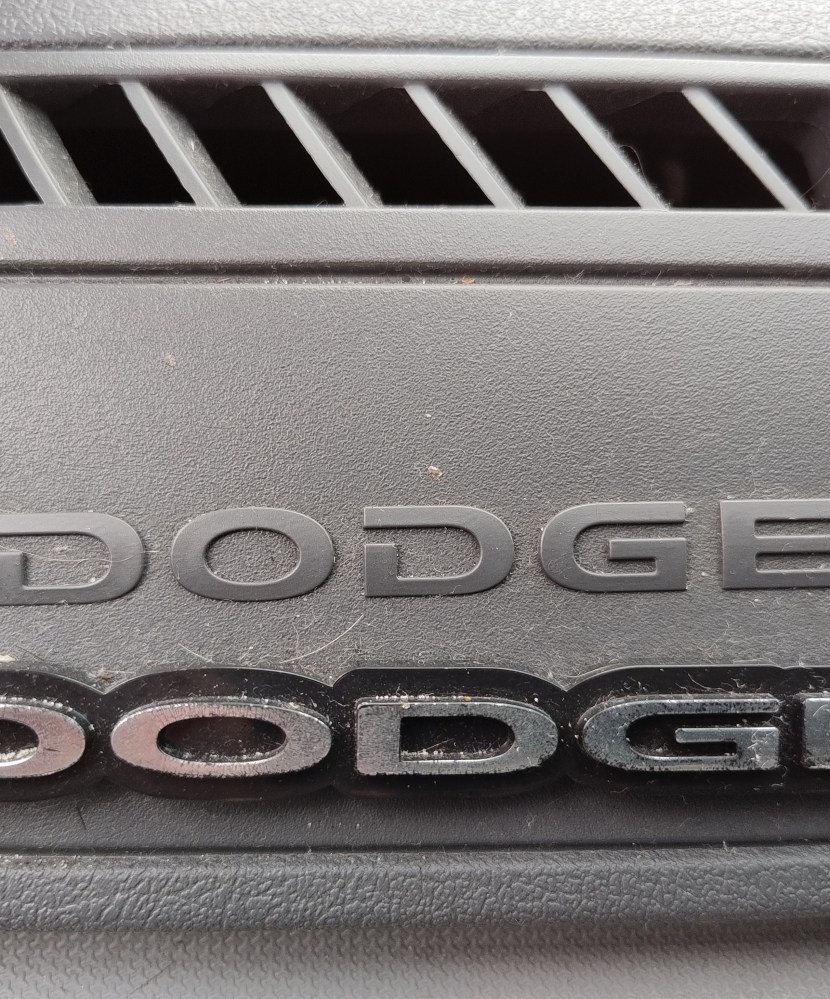
Dodge Avenger not on the level
What have the Romans ever done for us? Apart from the aqueduct, sanitation, etc etc, the Romans used water-filled tanks as an early type of spirit level. This method ruled until around 1661 when Frenchman Melchisédech Thévenot had a thought bubble and came up with what we know as the spirit level, featuring a bubble.
I’m thinking Dodge could have used either as a consultant on the dashboard decoration of my Avenger.
I bought the 2.4 litre 4-cylinder at auction, only inspecting it online, for a relatively small price. It had low kilometres for its age and seemingly only one owner. But I’ll level with you: it needed work.

After picking it up and seeing a “check engine” light, plus hearing a noisy alternator, I popped the bonnet (on the passenger side, because America) and discovered a rust spot in the passenger door frame.

However once those issues were fixed, the Dodge was a decent drive.
With the ignition key barrel towards the middle of the dash, my eyes were often fixed on the very 2000s grey plastic expanse that fronted the cabin.
On the very left of the dash, around where an American driver would place their hand to use the indicator, there’s a double Dodge.

The previous owner had stuck a large Dodge badge below a slightly raised Dodge brand stamp, part of a panel to cover what is a small oddments bin in left-hand-drive Avengers.
Look at the double Dodge closely.

See how the original Dodge has a slightly different font, but also sits slightly higher to the right, than the larger badge?
I’d like to imagine the alignment is on purpose: to counter the ever-so-slight curvature of the dash towards the middle audio stack. Had the extra badge not been added, lining up so nicely with the bottom of the panel, I might never have noticed the angle.
If you’re reading this in the US, I know what you’re wondering: is there the same alignment on the left-hand-drive Avenger dash? Well, after spending minutes looking for Chrysler corporate imagery, I may have an answer.

Looks pretty well lined up, to me! And those drinks in the Chill Zone™ also look good lined up – just chillin’
Let’s get a virtual ruler with a spirit level on this. “Enhance”.

If anything, perhaps the “Dodge” is a millimetre lower on the left, whereas on my RHD car it’s higher towards the centre of the dashboard.
Did someone at Dodge have a bad day when they drew up the dashboard for RHD Avengers? Was an Avenger team assembled for the task? Did they knock off early?
It would be great to have someone with a LHD Avenger confirm whether it’s just RHD Avengers that are dodgy with the dash branding. Maybe someone in my Dodge’s birthplace of Michigan, Melchisédech’s Paris.. or even Rome?
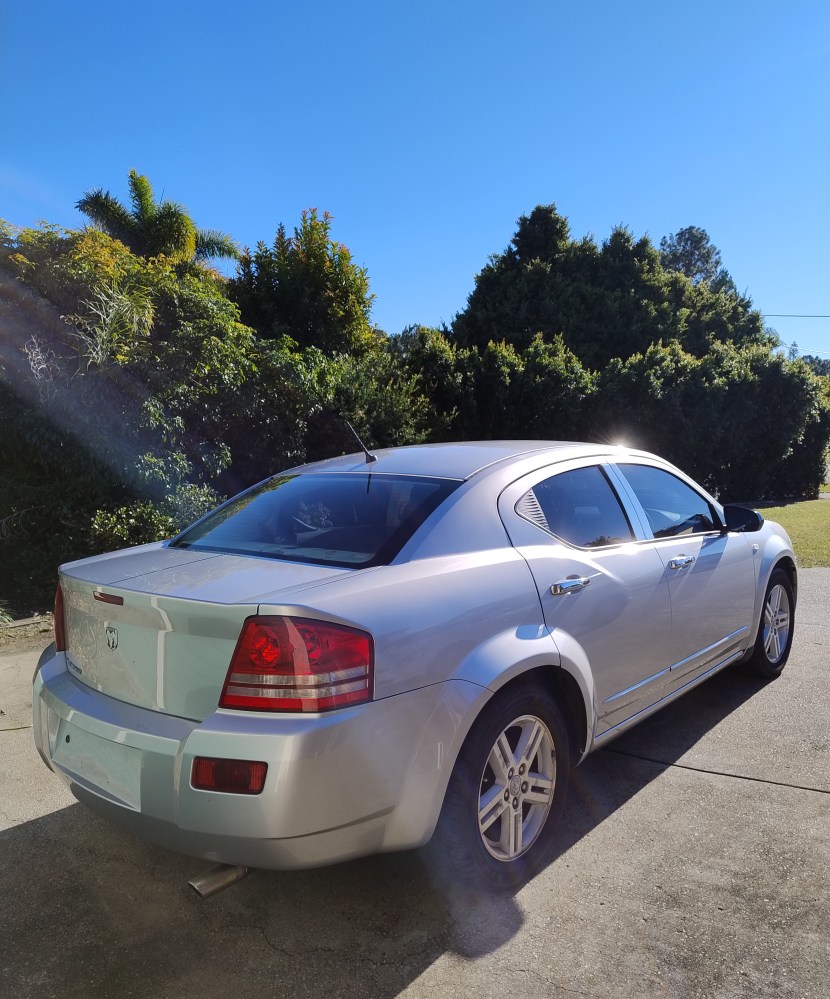
Avengers, assemble!
All the details on my ’07 Dodge Avenger RHD in Australia.. including an engine shared with Mitsubishi and some bizarre battery placement!
What is a ‘classic’ car? How long is a piece of string!
The comedic comeback line “how long is a piece of string” has been around at least since the mid-19th century. StackExchange says string was a way of explaining something unknown or variable in the world we could see, long before string theory tackled what we couldn’t see.
Pieces of string are also the yardstick for determining when a car is considered ‘classic’. In the UK, it might have to be 40 years old for tax exemption, while in America the collecting community sees 20 years as a starting point. In Australia, insurers might say a classic car has to be at least 15 years old, and recognised as a classic vehicle.
By that standard, even the last of the Hyundai Tiburons sold in Australia would qualify by age – but would they be “recognised”? Plus, is an early 90s more mundane car (albeit rare these days) a “classic”?
That’s the question I was pondering, when I looked at car-sharing (renting out) a piece of Australian automotive history: an Aussie-made 1991 Toyota Corolla sedan.

I’d found this low-kilometre example on Facebook Marketplace, at a car dealer just outside a regional town. On arrival, it was out the back of a shed full of cars, situated among cane fields. It was priced quite low, and the dealer said it was a trade-in he didn’t want.
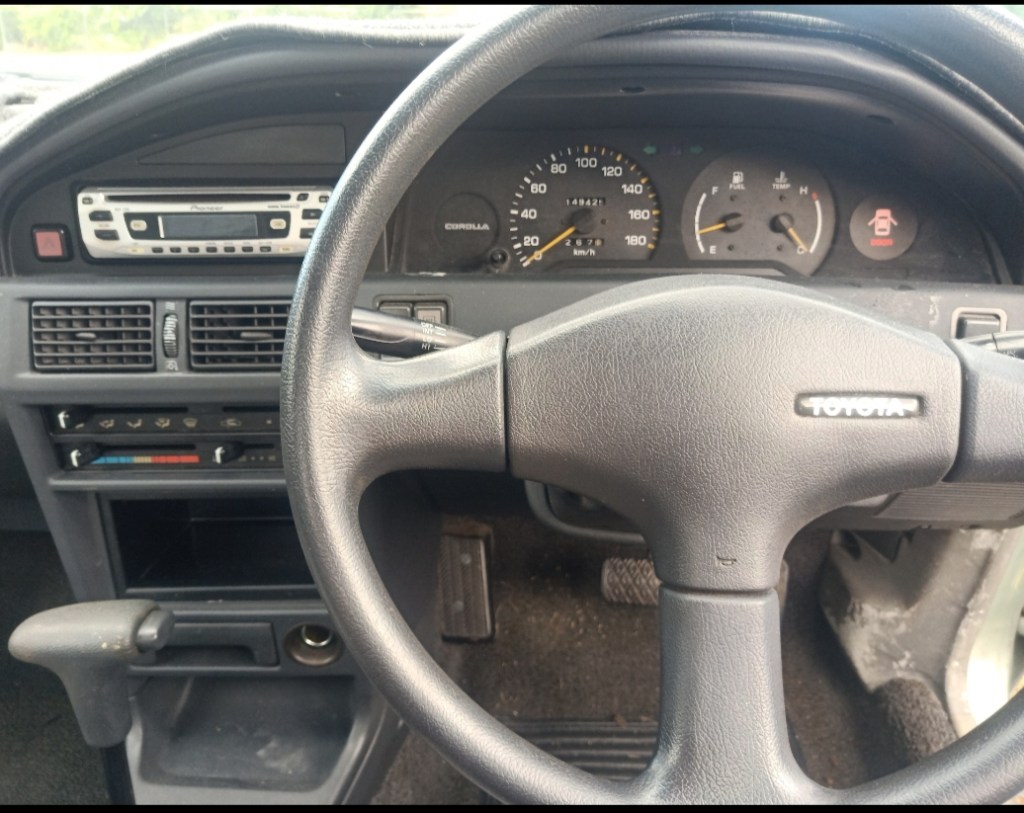
A solo test drive revealed a Toyota that was clean, had obviously been owned by an older person who added a weather shield and headlight protectors, and a car that had seen more mechanical maintenance than models much younger. On my return, I bought it and arranged to pick it up. It became car 52 in my personal automotive history.
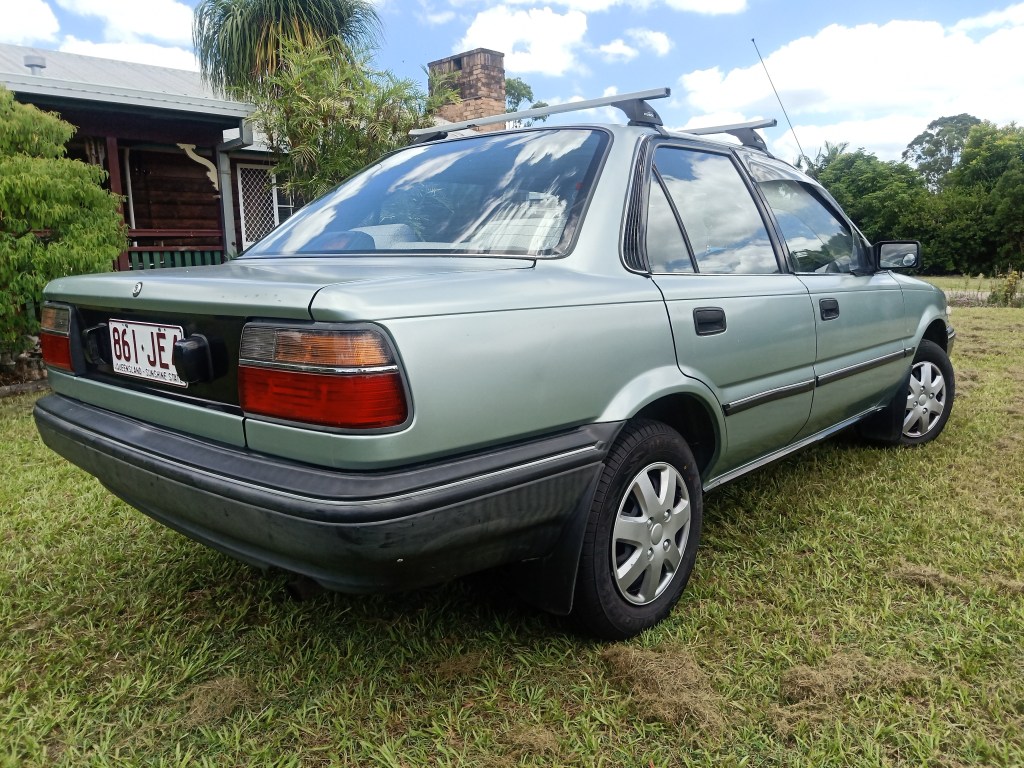
The 1.6 litre carburettor-engined Corolla did still need some maintenance, with an exhaust leak plus new tyres and rear shocks on the list. While that work was done, I made arrangements to list it as a “classic” on a car-sharing website. It has a category for cars over 25 years old. The site asked me all sorts of questions about the Corolla, and didn’t raise a red flag on its listing until the very end, when I’d already arranged car-sharing insurance.
Before the listing would go live, the site told me to talk to support. Now they wanted to know more about the car. They asked why I was listing a 33-year-old Toyota for car-sharing – I said it was to appeal to nostalgic renters, who grew up with the AE92 Corolla. The Dandenong-built 4A-F engine model is quickly becoming rare on the roads.
However, they refused to list it, saying the car was not rare or unique enough – but are those qualities what defines a “classic”? I checked on their website, and the only east coast listing for a car older than 25 was a 70s MGB sports car. Is that all a classic is: British-made, with Lucas electrics straight out of the Dark Ages?
With no rental use for the Corolla, I sold it to a first-time driver who loved the early 90s style and wanted a clean example of it. He sure got it – with no strings attached.
Maxima car, minima money
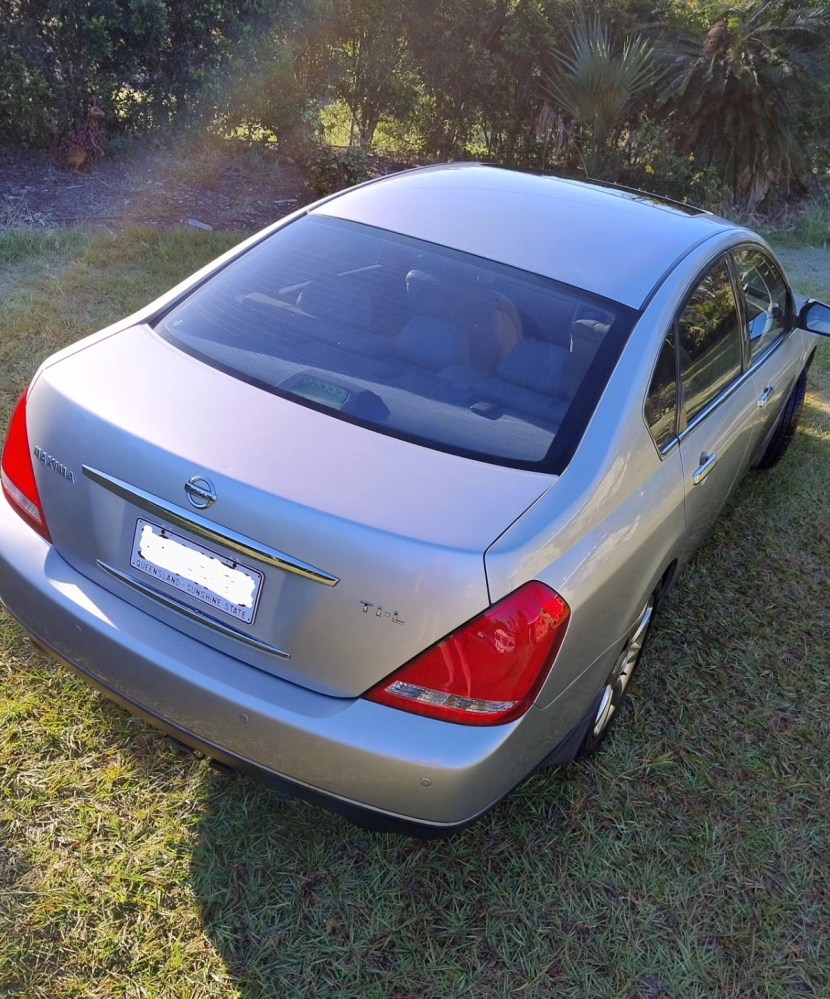
I went on a trip to the other side of town, to inspect and buy a 2004 Nissan Maxima, unregistered. I got it for a good price, although it did need some work.

It had been owned by the same family for 20 years, and had very low mileage.
The car is slightly smaller than the US market Maxima, and it’s known as the Teana overseas.
However my car does boast the revered VQ35DE V6 engine, also seen in the 350Z.
I plan to rent it out.
Stalking the indicator stalk
Forget putting your hand out the car window, when turning or stopping. That’s so 19th century. Hey, here’s Carl Benz’s carrier pigeon – go hang out with him and compare hand signals. Just bear in mind, you might want to actually have a window (or even a roof) on your car, first.
Electric turn signals on cars date back to the first few years of the 20th century, with a US patent filed in 1907 for illuminated “stop” and “turn” hand shapes. It would take a decade or two for indicators to be factory-fitted, and co-founder of The Autopian website, Jason Torchinsky, has written about which car had the first modern-style turn signals (and it wasn’t Buick).
Pretend-hands-as-turn-signals survived for some time. My dad used to drive tour buses, and as a child I’d go to the bus depot and sit in the driver’s seat of a coach, pulling a lever to raise a yellow plastic hand out of the driver’s side of the bus, used for safe turns across traffic. I don’t have any photo handy, but here’s how AI image generator Lexica imagined my instructions:

The plastic AI hand is a bit puffy, but it is yellow and extending outside of the bus.
Where is the Corona’s stalk?
Recently I’ve been thinking about the interior operation of turn signals/indicators/blinkers, after seeing an Instagram post by @garage_of_awesome writer Dave Carey. It featured 60s Toyota Coronas in all their “shovel nose” glory:
The post prompted me to remember the 60s Corona my dad bought around 1980 – the car I learned to drive in, at around 11 or 12, at the local showgrounds. Apart from unusual features like a front bench seat that wasn’t factory (or even Toyota) and a column gearshift you used like a horizontal Jenga game, the indicator “stalk” wasn’t a stalk at all – it was the horn rim on the steering wheel.

You swivelled the thick, horizontal part of the rim up or down, depending on whether you were indicating left or right. And going ‘up’ or ‘down’ depended on which side of the wheel you were grasping. On activation, there would be a delay and a quiet creaking noise as perhaps a bimetallic strip in the dash heated up to break a lighting circuit.
Dave tells a great story about noticing the lack of an indicator stalk on a Corona, and figuring out where it hid. And as he points out, it wasn’t the only car to have this horn rim indicator function.
Where is the Prefect’s stalk?
In the late 80s, a friend of my dad bought a 50s Ford Prefect off an old lady, who lived locally. He began to daily drive it, and one day while visiting our home he told me I could have a drive. I jumped at the chance, and after a bit of instruction on how to start it (pull a handle under the dash) I took off around the block.

The Prefect drove as slowly and stodgily as you’d expect, but it was fun to be transported back 3 decades. When it came time to turn the corner, I’d been warned where to find the indicator:
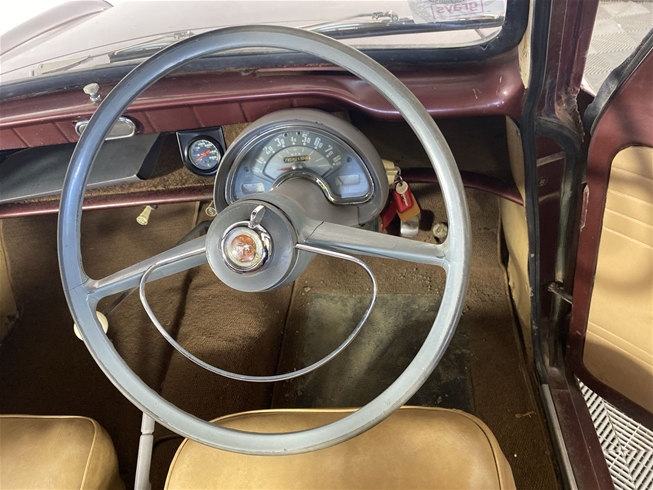
See that little chrome wing in the middle of the steering wheel? That’s pushed a little to either side to activate the indicators. I don’t recall whether the indicator then self-cancelled, or kept on blinking. I should have told Keith I wanted to buy his car when he was finished with it. I’ve no idea what happened to it.
Where is the Magna’s stalk?
1985 was the year my parents traded in their 70s Ford Falcon wagon for a new TM Mitsubishi Magna sedan. To me, it had a striking wedge shape and was the future – even if it was only the base model GLX. I got to drive it before buying my first car.

It was very conventional, but as you went higher up the spec list, things got strange for the Magna indicator stalk. This started with the SE, but the Elite had both a digital dash and this indicator arrangement:

That tab poking towards the driver on the right ‘wing’ behind the steering wheel, below the hazard light button, has control of the indicator – flick it up for left, and down for right.
I’ve never had the (presumed) pleasure of driving a Magna Elite – but if (when) I do, I’ll know how to indicate.
Where is the VW stalk?
In 2023, VW was making news for wanting to do away with indicator stalks altogether. They had plans to put the turn signal controls on the outer rim of the car’s steering wheel, along with other features like cruise. You’d be pressing buttons with your pointed finger, to activate the indicator – so, we’re basically back to hand signals again!
Cars fuelled by foreign language
William the Conqueror winning the Battle of Hastings in 1066 changed the English language. French was then used in courts and by aristocrats, with new words like “mutton” and “beef” filtering down from those aristocrats to everyday people, who had formerly said “sheep” and “cow”.
William had a fair bit of horsepower behind him – believed to be around 3,000 battle horses – but single cars today have eclipsed that. However, English speakers are still using foreign words with cars, nearly a thousand years after William started changing the language.
HECKBLENDE
I first heard of the German word “heckblende” when co-founder of The Autopian, Jason Torchinsky, wrote about it on his former website. It’s the reflective plastic panel which sits between a car’s rear taillights, which makes it seem that the taillight is one continuous unit across the rear. I might have previously called it a “garnish” – but heckblende sounds heck cooler.

Google translates heckblende from German as “rear cover”, which is fair as it’s not a lit-up unit, like so many cars now feature with LED strips across the back.
I have a heckblende on my 1985 Subaru XT Vortex and I even bought a spare one from a wrecking yard for $20 this week, to take it off eBay after it was ‘parked’ there for months. There’s not much call for an 80s Subaru heckblende Down Under, even thought we like a bit of ‘garnish’ on a schnitty.
QUATTROPORTE
There I was, thinking “Quattroporte” was some reference to Maserati valves, powertrain or its affordability multiple. However the name, translated from Italian, means “four doors”.
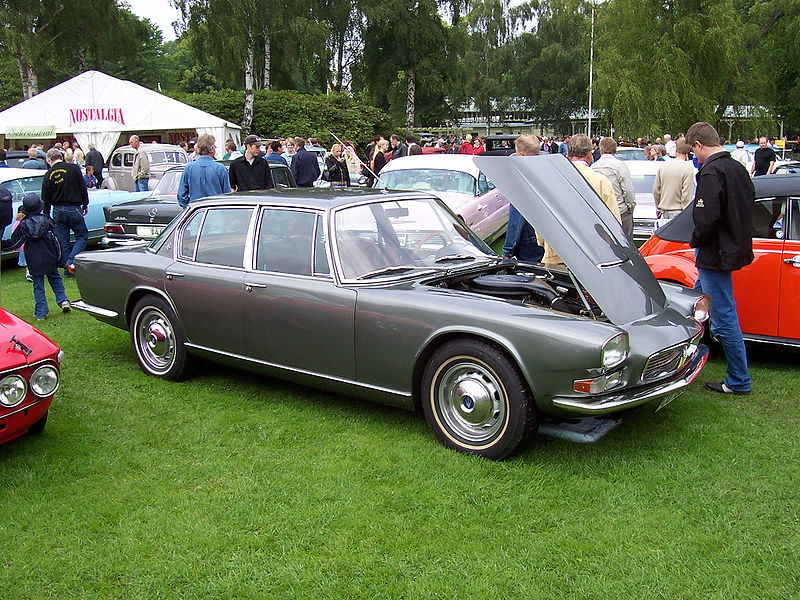
Maserati wanted a product to complement its coupes and spyders. The Quattroporte made its debut in 1963 with four doors and a 4.2 litre V8. It walked out the door last year, but could be back for 2025.
Plus, if you cut off the “porte”, you’re left with “quattro” and of course Audi has been using that naming and concept for decades now.
KAMMBACK
Harking back to Germany, and the “kammback” (or Kamm Tail as it’s also known) was a way to exploit the teardrop shape for car aerodynamics, without keeping the naturally long tail of the teardrop.
As MotorTrend writes, in 1938 German engineer and aerodynamicist Wunibald Kamm designed a BMW with a flat, vertical surface at the sloping rear. BMW called the car the “Kamm Coupe”, and eventually the kammback name stuck.
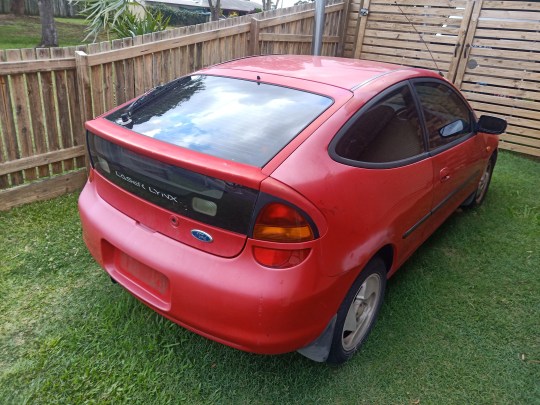
In 2021, I bought a car with a see-through kammback: the Ford Laser Lynx. It was made in Japan by Mazda and sold elsewhere in the world as the Familia Neo or 323C. With the kammback starting from a higher point, it didn’t suffer too much from the rear headroom restrictions that this design can create.
MITSUBISHI
Shifting focus to Japan, and we’ve all been speaking Japanese for decades without knowing it.

The brand name Mitsubishi literally means three diamonds – or water chestnuts if you go back far enough.
Here’s how the Mitsubishi website explains it:
“Mitsu means “three.” Hishi means “water chestnut,” and Japanese have used the word for a long time to denote a rhombus or diamond shape. In Japanese, the “h” sound is often pronounced as a “b” when it occurs in the middle of a word. So they pronounce the combination of mitsu and hishi as mitsubishi.”
In other Japanese words to be adopted by English speakers, you’d have to include “Kei” to cover any small car, produced to strict regulations for the Kei class on Japanese roads.
PAJERO
Turns out, we’ve all been swearing about Mitsubishis for over 40 years. The Pajero was launched in 1982 as a four-wheel-drive, just as family off-roading became a thing.
Over four generations, 3.25 million Pajeros were made, with production ending in 2021. To the English-speaking world, the Pajero was a mostly trusty name with Dakar Rally wins.

However, in Spanish “Pajero” is more about a rough ride, by yourself. It translates to “wanker”, so the model was renamed the Montero in some markets.
And let’s clear this up: Snopes rules out the story that General Motors had trouble selling the Nova model in Central America, because “no va” means “doesn’t go” in Spanish. Snopes says the car name is pronounced differently.
As the child of an affair, William the Conqueror was known for much of his life as “William the Bastard”. But as he arrived at Hastings in his Viking-style vessel – at least he didn’t drive a Pajero.
Square pegs in round holes: what fits in a car
English writer and lecturer Sydney Smith is said to have coined the phrase “square peg in a round hole” at the Royal Institution of Great Britain in the early 1800s. However, Wikipedia says he’s remembered in the US for his rhyming recipe for salad dressing:
Two boiled potatoes, strained through a kitchen sieve,
Softness and smoothness to the salad give;
Of mordant mustard take a single spoon—
Distrust the condiment that bites too soon;
Yet deem it not, thou man of taste, a fault,
To add a double quantity of salt.
I was reminded of his former saying, when trying to fit something in my 2006 Smart ForTwo. The French-made “art” of Swatch and Mercedes is a shade over 2.5 metres (100 inches) long, with probably at least a fifth of that length in front of your feet.

So, that leaves around 2 metres (6.5 feet) of interior space on the driver’s side. A foam block which covers the floor-mounted battery on the passenger side eats into that.

I recently found myself pushing a tape measure into my Smart from the back window, to see if there was enough room for a large, long window blind. The rear glass window gave me some leeway on length, which was just as well as I don’t think any other car in my fleet could have picked up the blind.
The Suzuki X-90 would need to have a T-top removed, and have the blind poking out of the rooftop.
The PolskiFiat 126p Niki was probably not long enough inside, although I could have tied it to the roof.
The Suzuki Mighty Boy wasn’t big enough in the cabin or the rear tray, and is on car club registration.
It would have fitted in the Subaru XT Vortex with the rear seat folded down, but that car is also on limited use club registration, so is not legally permitted to make a trip to the shops.
The shop website said the blind would be a little over 2 metres (6.5 feet).
I decided it would fit in the Smart, after removing the foam block in the passenger footwell and measuring the length diagonally from the driver’s side rear corner.
However, after buying the blind and seeing the tall, thin package tower over the 1.5 metre (59 inch) high Smart in the car park, I was worried I’d be taking the blind home with the back window somewhat open. I’d brought along a strap, just in case that was the solution.
Luckily, the package fitted – just – with the passenger side foam block removed. I once was blind, but now I see!
It’s not the first time I’ve fitted a seemingly impossible load into a vehicle. I once pushed a futon bed-style lounge into a 1996 Land Rover Discovery, via the rear door. It was in the ‘upright lounge seat’ position, to reduce its width. The lounge finished its journey through the car over the passenger front seat, which had to be folded down. It was previously moved in the Hyundai Trajet, but that wasn’t difficult at all with the seats taken out.

The Disco also took 2 old mattresses to the dump, with its creative capacity.
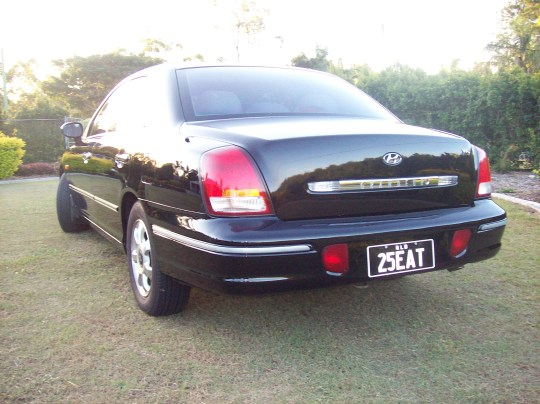
Also crammed into a car: long planks of timber, going through the rear ski port of my Hyundai Grandeur and resting on the leather-covered armrest between the front seats. I put down a towel underneath them.
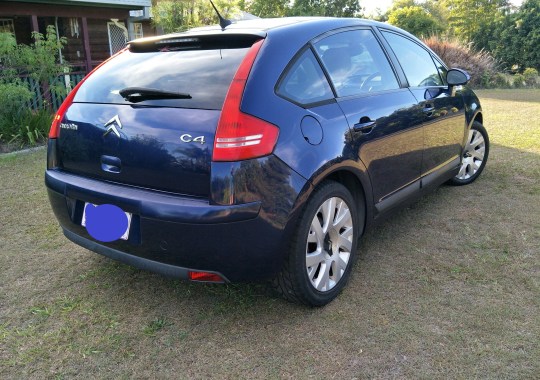
Plus, in the back of a Citroen C4 VTR hatch, an 80s electronic organ I saw on the roadside, for giveaway. I scavenged some parts for my own Yamaha.
Perhaps the most ever crammed into a car, was in my 80s Mitsubishi Colt when I took on a new job in 2003, 10 hours’ drive away in Sydney.

In the back of the Colt was a plastic dining table, some plastic chairs, a bedside table and plastic drawers filled with clothes. Before I set up home in a poolside former billiards room, I’d have to squeeze a foam double bed mattress and portable TV into the Colt as well.
Sydney Smith’s salad dressing recipe might not impress Homer Simpson, who once said “you don’t win friends with salad”. But having a car that fits square pegs into round holes, with fold-down seats, a ski port, or a foam block to lift out, might widen your circle of friends. Friends moving house, that is.
Dalmatian dream car: a.. Pongo?
The 1961 animated movie “101 Dalmatians” (originally titled with the number spelt out – but who does that?) saved Disney from a slump after “Sleeping Beauty” didn’t stir the box office.
It also saved Walt on production costs, with the art department making use of “Xerox photography”. That’s where the artist’s drawings are transferred directly to animation cells, without any need to hand ink the images onto the clear top layer.
I’ve been reading up on Dalmatian direction, after a dream I had last night. In it I was standing at a new car dealer, next to my Suzuki Mighty Boy, and I was looking at a new, small, two-seater car – called a Pongo. Today I’ve rediscovered that’s also the name of the protagonist dog in the movie (c’mon.. it’s over 40 years since I saw the movie).
Thanks to A.I online imaging, here’s roughly what the Pongo looked like:

Ignore the empty headlight housings – free A.I. images only go so far. The Pongo in my dream had LED units, including a soft ring around the outside for daytime running lights. These are available for cars now, but the Pongo itself was like the Mighty Boy in the 80s: a cheap, cheaply-made runaround. In my dream I was contrasting the load carrying capacity of the hatchback Pongo with the tiny tray on the back of my Mighty Boy.

Unfortunately, I woke up before getting a test drive of the Pongo. Maybe that’s my brain’s way of keeping my faith with the Mighty Boy and its low seating, “armstrong” windows (crank ’em yourself) and dashboard feature of a large Suzuki logo.

I don’t recall whether the Pongo was ICE or EV. As a runaround it could certainly work well on petrol or electricity. In the A.I image above, the lack of airflow at the front perhaps indicates this is an EV. However, if it’s ICE there’s room for an engine behind those front seats, like a Smart car. Perhaps air feeds through around the headlights?
The Pongo doesn’t seem to have a steering wheel – or is that a hint of a Tesla yoke? If it’s an autonomous car, it gets marked down in my book.
The image shows the Pongo with what seems to be rear-hinged “suicide” doors – or perhaps they fold down, like a welcome mat. I’m trademarking that idea.
The doors have a button on top to release them – hopefully it’s waterproof. Putting buttons on a high horizontal plane, where rain falls, will trigger Range Rover L322 owners and get them checking their window switches on the top of the door cards.
The seats in the Pongo appear to have defibrillator pads in their backs. Perhaps they give you a jolt if you’re a bit too tired to drive? I’m trademarking that, too.
I nearly wrote down the car’s name at 3am, but said it enough times in my head that it was still parked there in the morning. I also easily recalled the Pongo’s styling: round headlights with a smooth front, two seats and a hatchback.
So what prompted this dream? Yesterday I had been on Instagram, looking at the Nissan Pao owned by co-founder of The Autopian website, Jason Torchinsky. All the “Pike” cars have round headlights, but they have rear seating – even the S-Cargo.
If I went back to the dream, could I be tempted to trade in the Mighty Boy for the Pongo? I don’t think I’d trade the Suzuki – but if the Pongo was cheap enough, it might be a reliable daily.
And with talk of buying a Pongo, one of the biggest questions: who makes it? Perhaps Disney does and it’s a monthly subscription. Hmm, I’m leaning more to not adding a Pongo to the fleet.
While searching Lexica for a Pongo approximation, I also asked it for a dalmatian image. Just like Pongo in the movie, the dog needed black ears. Here’s what A.I. served up, as a “realistic” image of a walking dalmatian:

That front leg will have Walt rolling in his grave.
Or, if the stories are true, his cryo-chamber.
Persistence of vision – with my former cars
The 1980s reboot of the TV series “Twilight Zone” ended each episode with a CBS logo and “In Cooperation With” the production company “Persistence Of Vision”. 1985 was the first time I’d ever heard of the term, and it would be a few years before I’d find out what it meant – as of course this was pre-internet, we only had cumbersome volumes of Encyclopedia Britannica on the shelf, and only occasional access to the local library.
From 80s Twlight Zone, the Wes Craven-directed episode “A Little Peace and Quiet” stays with me – not only because of the credits, but the content: a woman with a mysterious pendant could shout “shut up!” and the world froze, except for her – even as nuclear missiles were close to exploding over American soil.

Persistence of vision is where your eye ‘keeps’ an image that has disappeared, for a fraction of a second longer, due to the brain being a bit slow in processing it. The next image to hit the eye is merged with the remaining optical illusion. It’s why waving a bright object at night might make it look like a solid line in the air. It also helps us to see movies and animation as flowing media – not separate images.
This week I’ve been reminded – again – that cars I’ve sold years ago also persist in vision, and presence, to me.
Hyundai Trajet
I was driving home when I saw the “family truckster” we’d sold locally 8 years ago, waiting at the lights in the opposite direction.
See my video of the Trajet here.
It was the relatively unknown V6 Hyundai Trajet, that we bought with low kilometres for a very good price around 2010, because no-one else knew what it was. This “people mover” served us well, even without a sliding door on the side, but as kids grew up and got their own social lives, we didn’t need a somewhat thirsty 7-seater.
Given it was sold locally, it’s not that surprising that I’d see it again. I think this is the third sighting – but the first two were years ago.
Mazda 323
My first car was a rusty Toyota, so was probably scrapped after I traded it in. However, my second car – a 1981 Mazda 323 – was definitely re-sold by the dealer, as I saw it a couple of years later, with my distinctive spray-painted grill and wipers, in a fast food carpark on the other side of the city.

If that’s a lucky spot – the next one is even more amazing.
Ford Ka
In 2007 I bought a 2001 Ford Ka off eBay, collected it from 400 kilometres away and drove it around for a year or so, enjoying the sunroof and wheel-at-each-corner dynamics.
I ended up selling it to a young woman who’d been driven around 70 kilometres north to inspect it, and she bought it (rarity means long distance tyre-kicking, especially for me!)
She was still living at home, and that home was around 10 minutes’ drive from my parents’ house. So I was in her neighbourhood on the occasional weekend, driving through it to visit mum and dad.
One weekend afternoon, I was heading home from their place when I stopped at some lights in that nearby neighbourhood – and what car (sorry, Ka) should turn across my path, but the Ford I’d sold some months before. She was still enjoying it.
Hyundai Lantra
The next car is directly connected to my parents: it was their 1991 Hyundai Lantra (called Lantra at the time, not Elantra, because Mitsubishi was selling a Magna Elante). This dealer demo was replaced after some years (with “church on Sunday” kilometres and power locks that always played up) and my sister-in-law used it. When she was ready to move it on, I bought it and daily drove it. After a couple of years, I decided it was time to sell it (as I do).
For a 20-year-old car, it still had amazingly low kilometres and a young local couple bought it. I’d see it parked at their place – before one day it disappeared. I then saw an old man driving it at the local shopping centre (I stopped and spoke to him about it). Then, a couple of years later, it was for sale on Marketplace with the same registration plates. I asked the seller whether she’d bought it from an elderly couple, and she (rudely, I thought) said no. If she’d been more talkative, I might have bought it back!
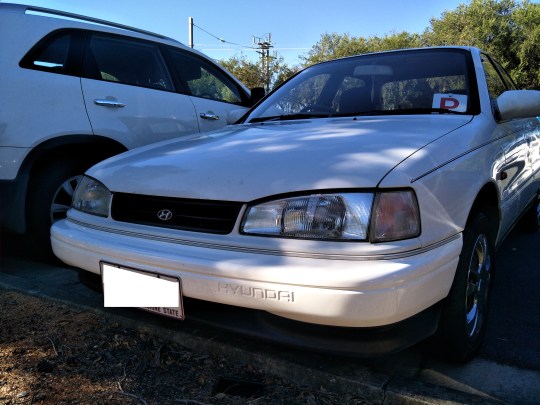
But that wasn’t my final brush with this early Hyundai product: a year or so on, I saw it parked at the local railway station – this time with a new driver’s red P-plate in the windscreen.
Proton Gen2
Browsing eBay brought me together with the Proton Gen2. It was an unwanted trade-in at a dealer, and the price reflected that. After some minor maintenance, I was able to sample the Lotus-tuned suspension and hard plastic interior. It was actually quite a good drive – but of course, one day I decided to sell it.
This car was sold to a young lady in the local area – but not too local. However, the spot where I spied this car after selling it was a long way from both our homes. It was during the morning rush, but on a far western route, which I took to avoid the traffic. The orange Proton that drove up behind me stood out in my rear view mirror, and I double-checked the registration plate as I did the double take. Yep, it was my former Proton.
Land Rover Discovery
The 1996 Land Rover Discovery diesel that I bought for a song (and had a mechanic friend put in a new gearbox) took me on some of my first offroad adventures. When I sold the somewhat rusty “Monster” locally, the new owners were going to use it for parts – or so they said. It must have scrubbed up OK, as I saw it back on the roads a short time later.
Other encounters
Some cars I’ve seen again – just not in person.
My Daihatsu Copen was seen up for sale online (and sadly I missed out on buying it back).
The KS Mitsubishi Verada which I sold locally was put up for sale a couple of years later on Marketplace. I spoke to the current owner, and an interstate collector was buying it (it was a bit of a museum piece).
And I saw the 1998 MG-F I’d sold to a young man come up on the Instagram feed of motoring journalist William Stopford. He’d spotted it parked in the city, so the mechanical work I’d had done on the mid-engined Brit had kept it happy.
Then there’s also the Renault Megane I saw advertised by the new owners, the Smart which the new owner re-sold online within weeks, and the rescued Subaru Vortex which went through a few owners, and is still awaiting restoration.
There are other, even more tenuous, instances where I caught up with my old cars – but that’s just… “insistence” of vision.
 Classic and Clunker