Tagged: Ka
Small or medium rare cars
Rarity on four (or even three) wheels isn’t always the result of a purposely-planned creation from a bespoke source. Sometimes it happens because a child can’t make “vroom vroom” noises with a toy.
That’s how the pink Hot Wheels “Beach Bomb” rear-loader of 1969 became so rare, that only 2 are known to exist. It was made in the image of a VW Kombi, with 2 surfboards poking out the back. And it was pink, which wasn’t seen as a popular colour.
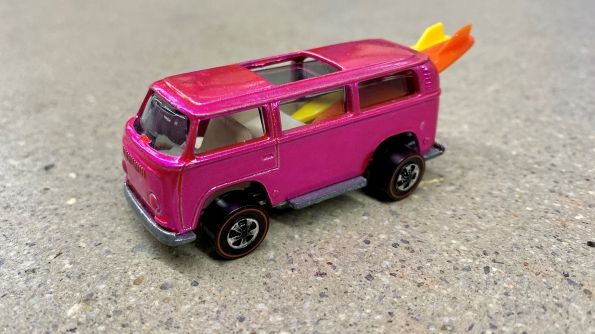
The Beach Bomb prototypes were found to be too top-heavy and prone to falling over while kids were letting them roll across the ground. Hot Wheels fixed this problem by going into production with a weighted model VW that carried the surfboards on its side.
The rear-loader prototypes were left with Hot Wheels employees – and one of the pink models ended up with a collector. It’s now valued at over $150,000.
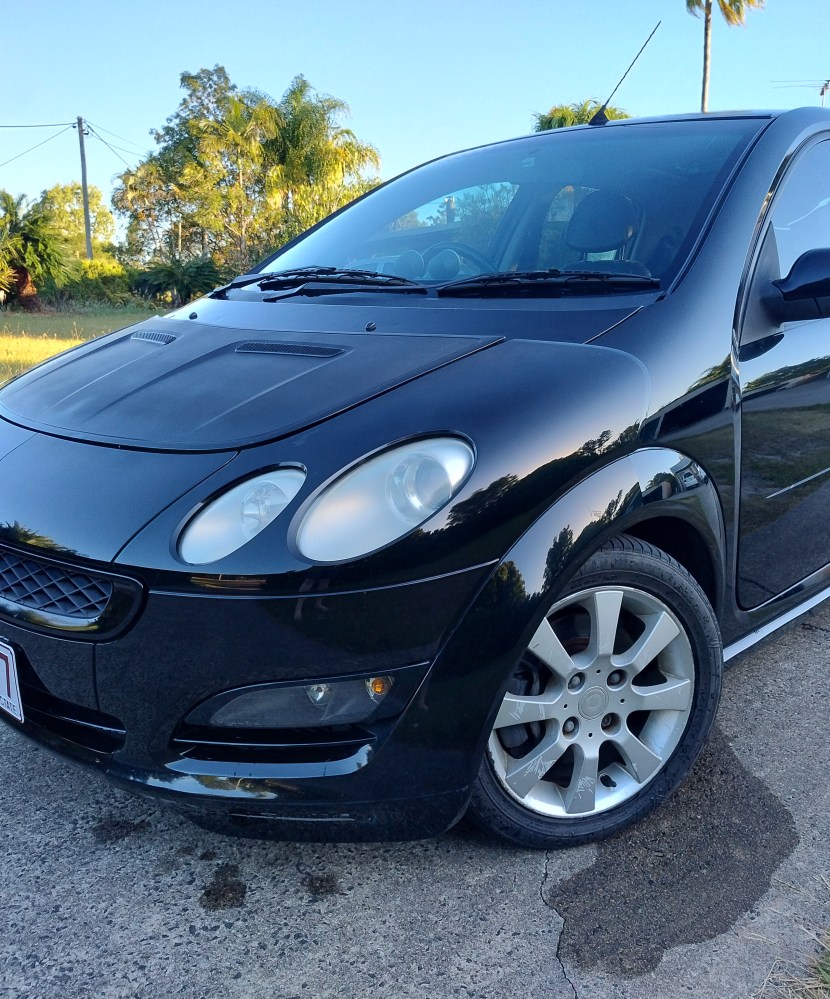
I currently have a rare car in my driveway – but it’s bigger than a toy, planted well on the road and it’s black. Only 1,284 Smart ForFour Brabus were made in the Netherlands in the production years of 2005 and 2006. I believe only 50 of them made it to Australia. In 2006, they cost an eye-watering $39,990.
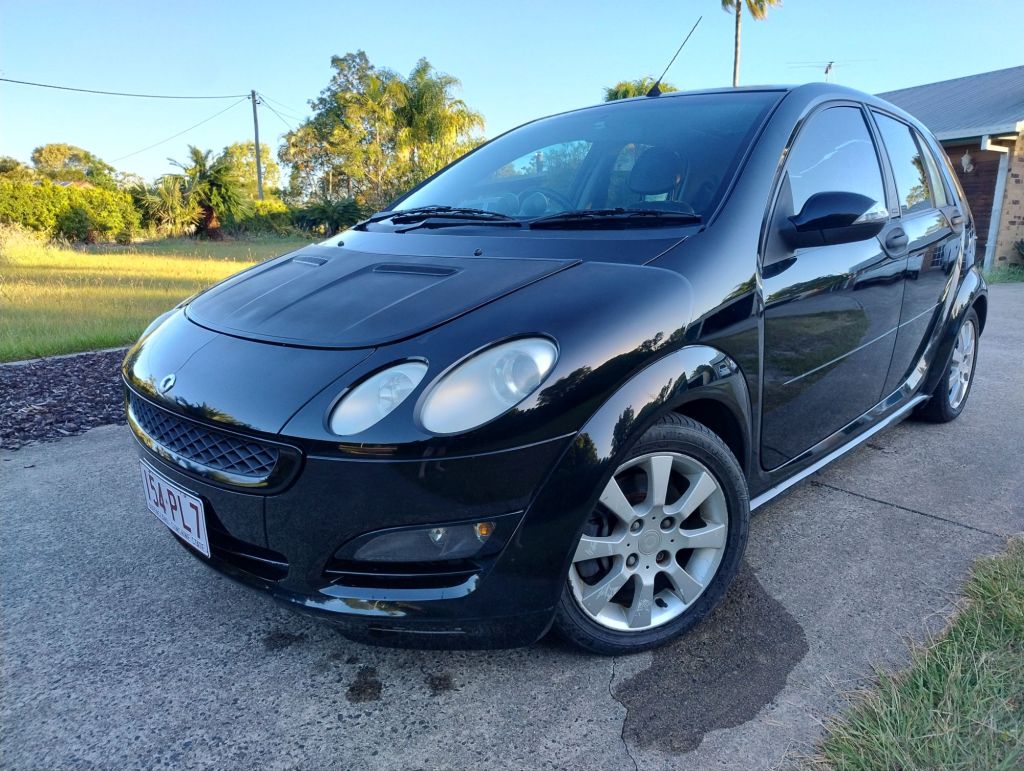
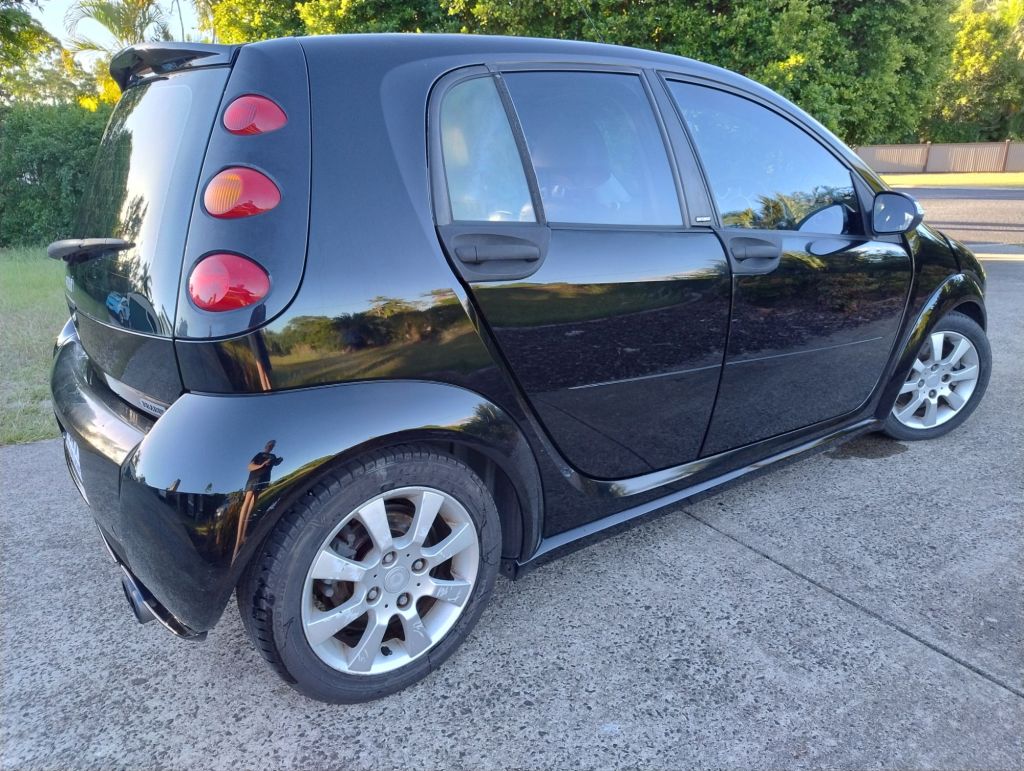
I only became aware of this sporty Smart through a friend’s enthusiasm for the model. This 2006 Smart ForFour Brabus manual turbo had 200,000 kilometres on the clock, plus a few minor hail dents on the very small area of the car that’s made of metal, not plastic.
It was a bit of a fixer-upper that also came with a damaged ForFour, so it wasn’t suitable for his garage. I felt it was worth buying, for the car’s rarity and its 177 horsepower.
Oh yes – it packs 130 kW. That’s because it’s based on the ’00s Mitsubishi Colt Ralliart, with some extra tuning by Brabus to get an extra 17 kW out of the 4G15T engine. It’ll hit 100km/h in around 6.9 seconds.
So I negotiated a price with the seller, had the wreck delivered on a trailer and awaited the delivery of the Brabus, with its plates taken off on arrival.
It has a passable exterior, but a nice interior. Leather seats have headrests embossed with the letter ‘B’. It’s equipped with air conditioning and an Alpine audio unit. The car has a clear plastic roof on the front half, and a glass roof on the back half. Interior blinds take the bite out of the sun.
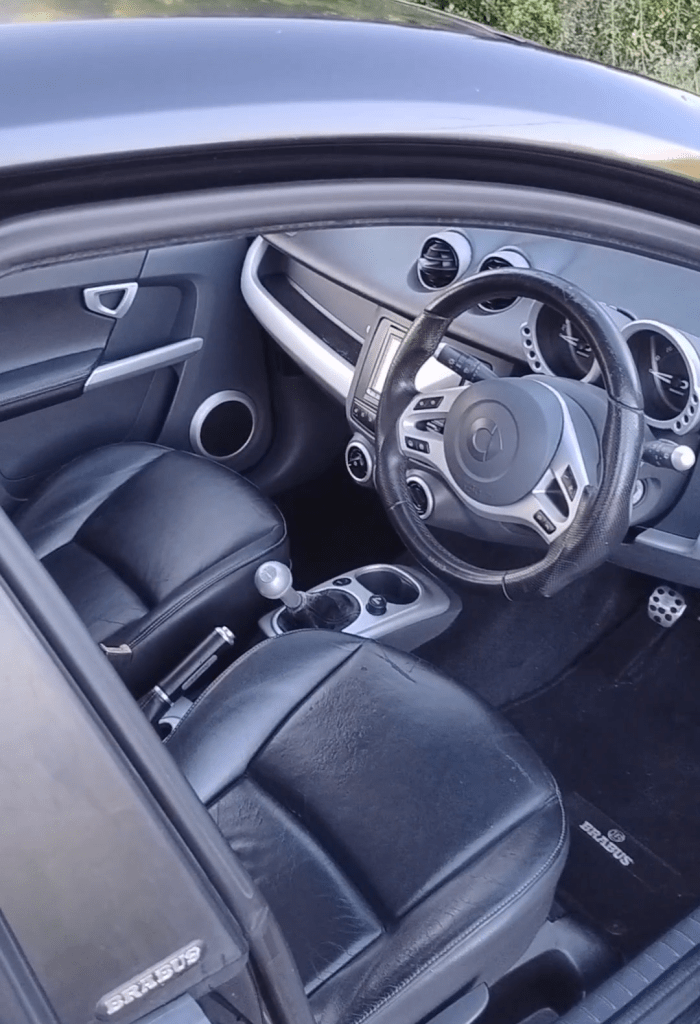
After spending quite a bit of money on a new timing belt, gaskets and suspension, the Brabus was back on the road – albeit on ‘regular’ rims, with the damaged Brabus rims on the wreck.
It’s great to drive, with 2nd and 3rd gears building up a head of turbo steam in a jaw-dropping way. It’s only carrying 1,090kg so the power-to-weight ratio is 8.4kg per kW.
I will be looking to sell it in 2026, so watch this space if you’re a bizarre Brabus fan.
My motoring history has a few rare beasts. It started with a Spanish SEAT Ibiza ..then a Polish FSM Niki ..a Daihatsu Copen ..a Ford Ka ..a Hyundai Grandeur ..a Ford Taurus ..a Ford Laser Lynx ..a Suzuki X-90 ..a Dodge Avenger ..and my ’85 Subaru Vortex XT
Just like that Hot Wheels Beach Bomb, this scrappy sports car from Brabus gives me the vroom-vrooms – but no surfboards needed.
Persistence of vision – with my former cars
The 1980s reboot of the TV series “Twilight Zone” ended each episode with a CBS logo and “In Cooperation With” the production company “Persistence Of Vision”. 1985 was the first time I’d ever heard of the term, and it would be a few years before I’d find out what it meant – as of course this was pre-internet, we only had cumbersome volumes of Encyclopedia Britannica on the shelf, and only occasional access to the local library.
From 80s Twlight Zone, the Wes Craven-directed episode “A Little Peace and Quiet” stays with me – not only because of the credits, but the content: a woman with a mysterious pendant could shout “shut up!” and the world froze, except for her – even as nuclear missiles were close to exploding over American soil.

Persistence of vision is where your eye ‘keeps’ an image that has disappeared, for a fraction of a second longer, due to the brain being a bit slow in processing it. The next image to hit the eye is merged with the remaining optical illusion. It’s why waving a bright object at night might make it look like a solid line in the air. It also helps us to see movies and animation as flowing media – not separate images.
This week I’ve been reminded – again – that cars I’ve sold years ago also persist in vision, and presence, to me.
Hyundai Trajet
I was driving home when I saw the “family truckster” we’d sold locally 8 years ago, waiting at the lights in the opposite direction.
See my video of the Trajet here.
It was the relatively unknown V6 Hyundai Trajet, that we bought with low kilometres for a very good price around 2010, because no-one else knew what it was. This “people mover” served us well, even without a sliding door on the side, but as kids grew up and got their own social lives, we didn’t need a somewhat thirsty 7-seater.
Given it was sold locally, it’s not that surprising that I’d see it again. I think this is the third sighting – but the first two were years ago.
Mazda 323
My first car was a rusty Toyota, so was probably scrapped after I traded it in. However, my second car – a 1981 Mazda 323 – was definitely re-sold by the dealer, as I saw it a couple of years later, with my distinctive spray-painted grill and wipers, in a fast food carpark on the other side of the city.

If that’s a lucky spot – the next one is even more amazing.
Ford Ka
In 2007 I bought a 2001 Ford Ka off eBay, collected it from 400 kilometres away and drove it around for a year or so, enjoying the sunroof and wheel-at-each-corner dynamics.
I ended up selling it to a young woman who’d been driven around 70 kilometres north to inspect it, and she bought it (rarity means long distance tyre-kicking, especially for me!)
She was still living at home, and that home was around 10 minutes’ drive from my parents’ house. So I was in her neighbourhood on the occasional weekend, driving through it to visit mum and dad.
One weekend afternoon, I was heading home from their place when I stopped at some lights in that nearby neighbourhood – and what car (sorry, Ka) should turn across my path, but the Ford I’d sold some months before. She was still enjoying it.
Hyundai Lantra
The next car is directly connected to my parents: it was their 1991 Hyundai Lantra (called Lantra at the time, not Elantra, because Mitsubishi was selling a Magna Elante). This dealer demo was replaced after some years (with “church on Sunday” kilometres and power locks that always played up) and my sister-in-law used it. When she was ready to move it on, I bought it and daily drove it. After a couple of years, I decided it was time to sell it (as I do).
For a 20-year-old car, it still had amazingly low kilometres and a young local couple bought it. I’d see it parked at their place – before one day it disappeared. I then saw an old man driving it at the local shopping centre (I stopped and spoke to him about it). Then, a couple of years later, it was for sale on Marketplace with the same registration plates. I asked the seller whether she’d bought it from an elderly couple, and she (rudely, I thought) said no. If she’d been more talkative, I might have bought it back!
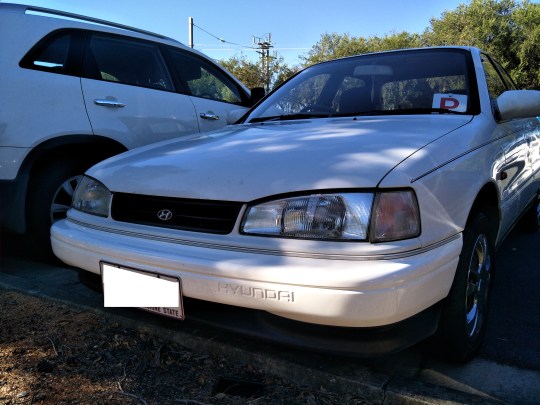
But that wasn’t my final brush with this early Hyundai product: a year or so on, I saw it parked at the local railway station – this time with a new driver’s red P-plate in the windscreen.
Proton Gen2
Browsing eBay brought me together with the Proton Gen2. It was an unwanted trade-in at a dealer, and the price reflected that. After some minor maintenance, I was able to sample the Lotus-tuned suspension and hard plastic interior. It was actually quite a good drive – but of course, one day I decided to sell it.
This car was sold to a young lady in the local area – but not too local. However, the spot where I spied this car after selling it was a long way from both our homes. It was during the morning rush, but on a far western route, which I took to avoid the traffic. The orange Proton that drove up behind me stood out in my rear view mirror, and I double-checked the registration plate as I did the double take. Yep, it was my former Proton.
Land Rover Discovery
The 1996 Land Rover Discovery diesel that I bought for a song (and had a mechanic friend put in a new gearbox) took me on some of my first offroad adventures. When I sold the somewhat rusty “Monster” locally, the new owners were going to use it for parts – or so they said. It must have scrubbed up OK, as I saw it back on the roads a short time later.
Other encounters
Some cars I’ve seen again – just not in person.
My Daihatsu Copen was seen up for sale online (and sadly I missed out on buying it back).
The KS Mitsubishi Verada which I sold locally was put up for sale a couple of years later on Marketplace. I spoke to the current owner, and an interstate collector was buying it (it was a bit of a museum piece).
And I saw the 1998 MG-F I’d sold to a young man come up on the Instagram feed of motoring journalist William Stopford. He’d spotted it parked in the city, so the mechanical work I’d had done on the mid-engined Brit had kept it happy.
Then there’s also the Renault Megane I saw advertised by the new owners, the Smart which the new owner re-sold online within weeks, and the rescued Subaru Vortex which went through a few owners, and is still awaiting restoration.
There are other, even more tenuous, instances where I caught up with my old cars – but that’s just… “insistence” of vision.
 Classic and Clunker