Category: Clunker
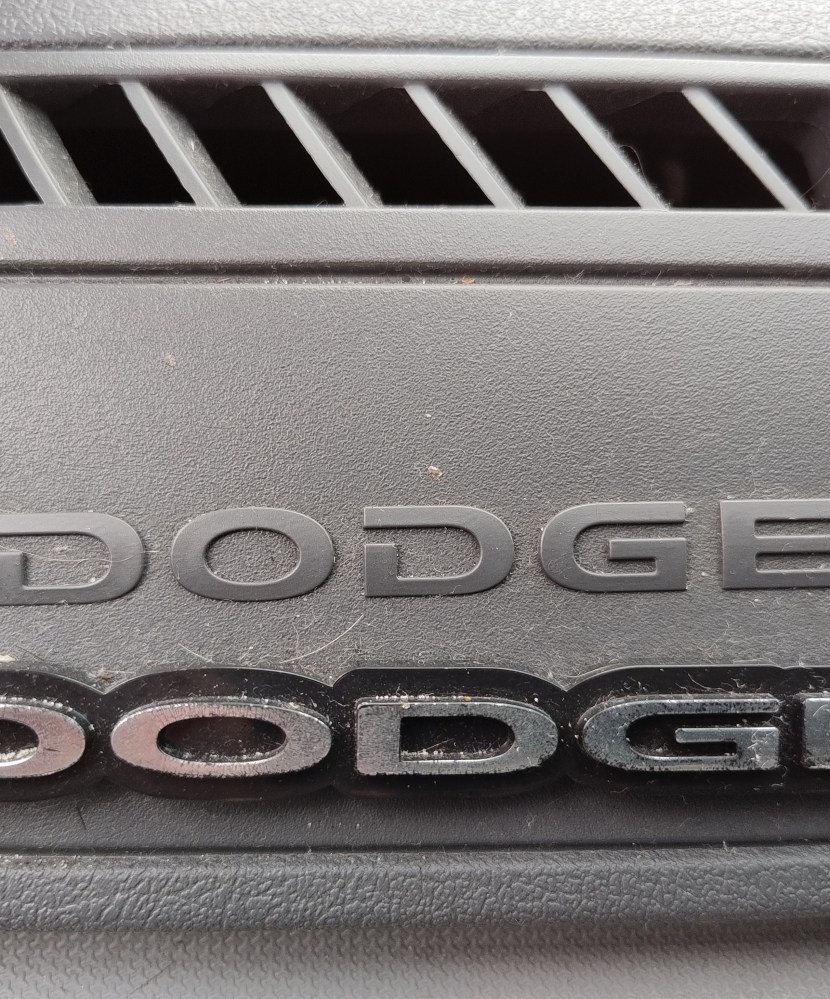
Dodge Avenger not on the level
What have the Romans ever done for us? Apart from the aqueduct, sanitation, etc etc, the Romans used water-filled tanks as an early type of spirit level. This method ruled until around 1661 when Frenchman Melchisédech Thévenot had a thought bubble and came up with what we know as the spirit level, featuring a bubble.
I’m thinking Dodge could have used either as a consultant on the dashboard decoration of my Avenger.
I bought the 2.4 litre 4-cylinder at auction, only inspecting it online, for a relatively small price. It had low kilometres for its age and seemingly only one owner. But I’ll level with you: it needed work.

After picking it up and seeing a “check engine” light, plus hearing a noisy alternator, I popped the bonnet (on the passenger side, because America) and discovered a rust spot in the passenger door frame.

However once those issues were fixed, the Dodge was a decent drive.
With the ignition key barrel towards the middle of the dash, my eyes were often fixed on the very 2000s grey plastic expanse that fronted the cabin.
On the very left of the dash, around where an American driver would place their hand to use the indicator, there’s a double Dodge.

The previous owner had stuck a large Dodge badge below a slightly raised Dodge brand stamp, part of a panel to cover what is a small oddments bin in left-hand-drive Avengers.
Look at the double Dodge closely.

See how the original Dodge has a slightly different font, but also sits slightly higher to the right, than the larger badge?
I’d like to imagine the alignment is on purpose: to counter the ever-so-slight curvature of the dash towards the middle audio stack. Had the extra badge not been added, lining up so nicely with the bottom of the panel, I might never have noticed the angle.
If you’re reading this in the US, I know what you’re wondering: is there the same alignment on the left-hand-drive Avenger dash? Well, after spending minutes looking for Chrysler corporate imagery, I may have an answer.

Looks pretty well lined up, to me! And those drinks in the Chill Zone™ also look good lined up – just chillin’
Let’s get a virtual ruler with a spirit level on this. “Enhance”.

If anything, perhaps the “Dodge” is a millimetre lower on the left, whereas on my RHD car it’s higher towards the centre of the dashboard.
Did someone at Dodge have a bad day when they drew up the dashboard for RHD Avengers? Was an Avenger team assembled for the task? Did they knock off early?
It would be great to have someone with a LHD Avenger confirm whether it’s just RHD Avengers that are dodgy with the dash branding. Maybe someone in my Dodge’s birthplace of Michigan, Melchisédech’s Paris.. or even Rome?
Stalking the indicator stalk
Forget putting your hand out the car window, when turning or stopping. That’s so 19th century. Hey, here’s Carl Benz’s carrier pigeon – go hang out with him and compare hand signals. Just bear in mind, you might want to actually have a window (or even a roof) on your car, first.
Electric turn signals on cars date back to the first few years of the 20th century, with a US patent filed in 1907 for illuminated “stop” and “turn” hand shapes. It would take a decade or two for indicators to be factory-fitted, and co-founder of The Autopian website, Jason Torchinsky, has written about which car had the first modern-style turn signals (and it wasn’t Buick).
Pretend-hands-as-turn-signals survived for some time. My dad used to drive tour buses, and as a child I’d go to the bus depot and sit in the driver’s seat of a coach, pulling a lever to raise a yellow plastic hand out of the driver’s side of the bus, used for safe turns across traffic. I don’t have any photo handy, but here’s how AI image generator Lexica imagined my instructions:

The plastic AI hand is a bit puffy, but it is yellow and extending outside of the bus.
Where is the Corona’s stalk?
Recently I’ve been thinking about the interior operation of turn signals/indicators/blinkers, after seeing an Instagram post by @garage_of_awesome writer Dave Carey. It featured 60s Toyota Coronas in all their “shovel nose” glory:
The post prompted me to remember the 60s Corona my dad bought around 1980 – the car I learned to drive in, at around 11 or 12, at the local showgrounds. Apart from unusual features like a front bench seat that wasn’t factory (or even Toyota) and a column gearshift you used like a horizontal Jenga game, the indicator “stalk” wasn’t a stalk at all – it was the horn rim on the steering wheel.

You swivelled the thick, horizontal part of the rim up or down, depending on whether you were indicating left or right. And going ‘up’ or ‘down’ depended on which side of the wheel you were grasping. On activation, there would be a delay and a quiet creaking noise as perhaps a bimetallic strip in the dash heated up to break a lighting circuit.
Dave tells a great story about noticing the lack of an indicator stalk on a Corona, and figuring out where it hid. And as he points out, it wasn’t the only car to have this horn rim indicator function.
Where is the Prefect’s stalk?
In the late 80s, a friend of my dad bought a 50s Ford Prefect off an old lady, who lived locally. He began to daily drive it, and one day while visiting our home he told me I could have a drive. I jumped at the chance, and after a bit of instruction on how to start it (pull a handle under the dash) I took off around the block.

The Prefect drove as slowly and stodgily as you’d expect, but it was fun to be transported back 3 decades. When it came time to turn the corner, I’d been warned where to find the indicator:
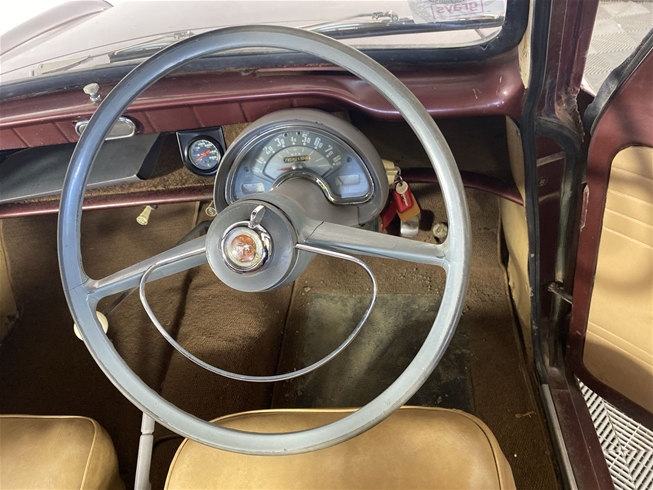
See that little chrome wing in the middle of the steering wheel? That’s pushed a little to either side to activate the indicators. I don’t recall whether the indicator then self-cancelled, or kept on blinking. I should have told Keith I wanted to buy his car when he was finished with it. I’ve no idea what happened to it.
Where is the Magna’s stalk?
1985 was the year my parents traded in their 70s Ford Falcon wagon for a new TM Mitsubishi Magna sedan. To me, it had a striking wedge shape and was the future – even if it was only the base model GLX. I got to drive it before buying my first car.

It was very conventional, but as you went higher up the spec list, things got strange for the Magna indicator stalk. This started with the SE, but the Elite had both a digital dash and this indicator arrangement:

That tab poking towards the driver on the right ‘wing’ behind the steering wheel, below the hazard light button, has control of the indicator – flick it up for left, and down for right.
I’ve never had the (presumed) pleasure of driving a Magna Elite – but if (when) I do, I’ll know how to indicate.
Where is the VW stalk?
In 2023, VW was making news for wanting to do away with indicator stalks altogether. They had plans to put the turn signal controls on the outer rim of the car’s steering wheel, along with other features like cruise. You’d be pressing buttons with your pointed finger, to activate the indicator – so, we’re basically back to hand signals again!
Dalmatian dream car: a.. Pongo?
The 1961 animated movie “101 Dalmatians” (originally titled with the number spelt out – but who does that?) saved Disney from a slump after “Sleeping Beauty” didn’t stir the box office.
It also saved Walt on production costs, with the art department making use of “Xerox photography”. That’s where the artist’s drawings are transferred directly to animation cells, without any need to hand ink the images onto the clear top layer.
I’ve been reading up on Dalmatian direction, after a dream I had last night. In it I was standing at a new car dealer, next to my Suzuki Mighty Boy, and I was looking at a new, small, two-seater car – called a Pongo. Today I’ve rediscovered that’s also the name of the protagonist dog in the movie (c’mon.. it’s over 40 years since I saw the movie).
Thanks to A.I online imaging, here’s roughly what the Pongo looked like:

Ignore the empty headlight housings – free A.I. images only go so far. The Pongo in my dream had LED units, including a soft ring around the outside for daytime running lights. These are available for cars now, but the Pongo itself was like the Mighty Boy in the 80s: a cheap, cheaply-made runaround. In my dream I was contrasting the load carrying capacity of the hatchback Pongo with the tiny tray on the back of my Mighty Boy.

Unfortunately, I woke up before getting a test drive of the Pongo. Maybe that’s my brain’s way of keeping my faith with the Mighty Boy and its low seating, “armstrong” windows (crank ’em yourself) and dashboard feature of a large Suzuki logo.

I don’t recall whether the Pongo was ICE or EV. As a runaround it could certainly work well on petrol or electricity. In the A.I image above, the lack of airflow at the front perhaps indicates this is an EV. However, if it’s ICE there’s room for an engine behind those front seats, like a Smart car. Perhaps air feeds through around the headlights?
The Pongo doesn’t seem to have a steering wheel – or is that a hint of a Tesla yoke? If it’s an autonomous car, it gets marked down in my book.
The image shows the Pongo with what seems to be rear-hinged “suicide” doors – or perhaps they fold down, like a welcome mat. I’m trademarking that idea.
The doors have a button on top to release them – hopefully it’s waterproof. Putting buttons on a high horizontal plane, where rain falls, will trigger Range Rover L322 owners and get them checking their window switches on the top of the door cards.
The seats in the Pongo appear to have defibrillator pads in their backs. Perhaps they give you a jolt if you’re a bit too tired to drive? I’m trademarking that, too.
I nearly wrote down the car’s name at 3am, but said it enough times in my head that it was still parked there in the morning. I also easily recalled the Pongo’s styling: round headlights with a smooth front, two seats and a hatchback.
So what prompted this dream? Yesterday I had been on Instagram, looking at the Nissan Pao owned by co-founder of The Autopian website, Jason Torchinsky. All the “Pike” cars have round headlights, but they have rear seating – even the S-Cargo.
If I went back to the dream, could I be tempted to trade in the Mighty Boy for the Pongo? I don’t think I’d trade the Suzuki – but if the Pongo was cheap enough, it might be a reliable daily.
And with talk of buying a Pongo, one of the biggest questions: who makes it? Perhaps Disney does and it’s a monthly subscription. Hmm, I’m leaning more to not adding a Pongo to the fleet.
While searching Lexica for a Pongo approximation, I also asked it for a dalmatian image. Just like Pongo in the movie, the dog needed black ears. Here’s what A.I. served up, as a “realistic” image of a walking dalmatian:

That front leg will have Walt rolling in his grave.
Or, if the stories are true, his cryo-chamber.
Persistence of vision – with my former cars
The 1980s reboot of the TV series “Twilight Zone” ended each episode with a CBS logo and “In Cooperation With” the production company “Persistence Of Vision”. 1985 was the first time I’d ever heard of the term, and it would be a few years before I’d find out what it meant – as of course this was pre-internet, we only had cumbersome volumes of Encyclopedia Britannica on the shelf, and only occasional access to the local library.
From 80s Twlight Zone, the Wes Craven-directed episode “A Little Peace and Quiet” stays with me – not only because of the credits, but the content: a woman with a mysterious pendant could shout “shut up!” and the world froze, except for her – even as nuclear missiles were close to exploding over American soil.

Persistence of vision is where your eye ‘keeps’ an image that has disappeared, for a fraction of a second longer, due to the brain being a bit slow in processing it. The next image to hit the eye is merged with the remaining optical illusion. It’s why waving a bright object at night might make it look like a solid line in the air. It also helps us to see movies and animation as flowing media – not separate images.
This week I’ve been reminded – again – that cars I’ve sold years ago also persist in vision, and presence, to me.
Hyundai Trajet
I was driving home when I saw the “family truckster” we’d sold locally 8 years ago, waiting at the lights in the opposite direction.
See my video of the Trajet here.
It was the relatively unknown V6 Hyundai Trajet, that we bought with low kilometres for a very good price around 2010, because no-one else knew what it was. This “people mover” served us well, even without a sliding door on the side, but as kids grew up and got their own social lives, we didn’t need a somewhat thirsty 7-seater.
Given it was sold locally, it’s not that surprising that I’d see it again. I think this is the third sighting – but the first two were years ago.
Mazda 323
My first car was a rusty Toyota, so was probably scrapped after I traded it in. However, my second car – a 1981 Mazda 323 – was definitely re-sold by the dealer, as I saw it a couple of years later, with my distinctive spray-painted grill and wipers, in a fast food carpark on the other side of the city.

If that’s a lucky spot – the next one is even more amazing.
Ford Ka
In 2007 I bought a 2001 Ford Ka off eBay, collected it from 400 kilometres away and drove it around for a year or so, enjoying the sunroof and wheel-at-each-corner dynamics.
I ended up selling it to a young woman who’d been driven around 70 kilometres north to inspect it, and she bought it (rarity means long distance tyre-kicking, especially for me!)
She was still living at home, and that home was around 10 minutes’ drive from my parents’ house. So I was in her neighbourhood on the occasional weekend, driving through it to visit mum and dad.
One weekend afternoon, I was heading home from their place when I stopped at some lights in that nearby neighbourhood – and what car (sorry, Ka) should turn across my path, but the Ford I’d sold some months before. She was still enjoying it.
Hyundai Lantra
The next car is directly connected to my parents: it was their 1991 Hyundai Lantra (called Lantra at the time, not Elantra, because Mitsubishi was selling a Magna Elante). This dealer demo was replaced after some years (with “church on Sunday” kilometres and power locks that always played up) and my sister-in-law used it. When she was ready to move it on, I bought it and daily drove it. After a couple of years, I decided it was time to sell it (as I do).
For a 20-year-old car, it still had amazingly low kilometres and a young local couple bought it. I’d see it parked at their place – before one day it disappeared. I then saw an old man driving it at the local shopping centre (I stopped and spoke to him about it). Then, a couple of years later, it was for sale on Marketplace with the same registration plates. I asked the seller whether she’d bought it from an elderly couple, and she (rudely, I thought) said no. If she’d been more talkative, I might have bought it back!
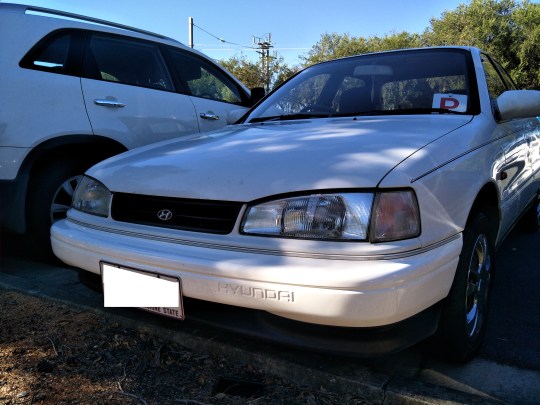
But that wasn’t my final brush with this early Hyundai product: a year or so on, I saw it parked at the local railway station – this time with a new driver’s red P-plate in the windscreen.
Proton Gen2
Browsing eBay brought me together with the Proton Gen2. It was an unwanted trade-in at a dealer, and the price reflected that. After some minor maintenance, I was able to sample the Lotus-tuned suspension and hard plastic interior. It was actually quite a good drive – but of course, one day I decided to sell it.
This car was sold to a young lady in the local area – but not too local. However, the spot where I spied this car after selling it was a long way from both our homes. It was during the morning rush, but on a far western route, which I took to avoid the traffic. The orange Proton that drove up behind me stood out in my rear view mirror, and I double-checked the registration plate as I did the double take. Yep, it was my former Proton.
Land Rover Discovery
The 1996 Land Rover Discovery diesel that I bought for a song (and had a mechanic friend put in a new gearbox) took me on some of my first offroad adventures. When I sold the somewhat rusty “Monster” locally, the new owners were going to use it for parts – or so they said. It must have scrubbed up OK, as I saw it back on the roads a short time later.
Other encounters
Some cars I’ve seen again – just not in person.
My Daihatsu Copen was seen up for sale online (and sadly I missed out on buying it back).
The KS Mitsubishi Verada which I sold locally was put up for sale a couple of years later on Marketplace. I spoke to the current owner, and an interstate collector was buying it (it was a bit of a museum piece).
And I saw the 1998 MG-F I’d sold to a young man come up on the Instagram feed of motoring journalist William Stopford. He’d spotted it parked in the city, so the mechanical work I’d had done on the mid-engined Brit had kept it happy.
Then there’s also the Renault Megane I saw advertised by the new owners, the Smart which the new owner re-sold online within weeks, and the rescued Subaru Vortex which went through a few owners, and is still awaiting restoration.
There are other, even more tenuous, instances where I caught up with my old cars – but that’s just… “insistence” of vision.
“Cut and shut”: crash repairs in days gone by
I just found a photo at Mum’s place, showing the driveway of my parents’ former home, around 1989.

It shows my Dad’s ’82 Mazda 323 (which I talked about in this article about my own) plus my brother’s ’82 XD Falcon, his ’77 HX Holden Kingswood and Mum’s ’85 Mitsubishi Magna. My own vehicle at the time isn’t seen – perhaps it’s in the garage.
Every one of these cars would visit the smash repairer, for some major repairs. With my brother at the wheel, the Kingswood hit a kerb at speed while cornering, and the front of the chassis was left quite bent.
The Falcon would be rolled on a back road. Yep, overturned.. with all four wheels pointing to the sky. The roof sported a slight peak in the middle until the repairs were finished.
Both were back on the road within a reasonable time.
The Magna was hit while parked in a street, by a car coming around the corner. It needed a new rear bumper and some minor bodywork.
Then there was Dad’s 323:

In late 1990, Dad stopped in traffic and a 4WD with a bullbar slammed into the back of the car – you can see the imprint of the bullbar uprights in the hatchback. The impact sent the Mazda into the back of the car in front, but thankfully only minor damage was caused there.
Here’s the kicker: Dad was driving the 323 after having signed a dealer contract to buy a used Land Cruiser, with the 323 as his trade-in. They told him to come back in a day or so, to pick up the new vehicle. So with the trade now an insurance matter, Dad somehow rustled up the funds to complete the deal.
Even with its bent rear quarter panel, squashed towbar and flattened hatch, the 323 was fully repaired (looking better than ever with new lights, paint and plastics) and was soon sold to a family friend.
These photos got me thinking about smash repair standards today, and in days gone by. Would a 12-year-old sedan with a visibly bent chassis be straightened out? Would a 7-year-old sedan, that had been found crashed and upside down, be brought back to life?
In 1989, at least, the answer was ‘yes’. I think today these cars would be written off.
Around this time, I was introduced to the body repair term “cut and shut”. That’s because my friend’s early 80s Honda Prelude was left in such a state after being hit while parked, that nearly half of another car was welded to what remained of his.

He’d left the car parked on the front lawn at his parents’ house, in a quiet street about 4 houses from the corner. One night someone took that corner too fast, and ran into the back of his Prelude. Unfortunately the impact pushed the car forward – into the power pole that also stood on the lawn.
So this Honda was a candle that had been burnt at both ends. The insurance company arranged for the repair, and the body shop gave him an awful, beaten up early 70s Toyota Corona to drive, for the months it took to fix the car.
After a very long wait, the car was returned, with the shop saying they’d “cut and shut” a new rear section on the car. The Prelude looked great, but never drove the same – and the sunroof often refused to open or close.
So much for “cut and shut”. It wasn’t long before the Honda was an open and shut case, and traded in.
Test driving, but never buying
Carl Benz’s wife Bertha is credited with the world’s first test drive. Without the “father of the automobile” knowing, she and their 2 sons drove to see her mother.
As drive.com.au reports, the journey was to prove to Carl the car could be commercially viable. And we can also thank Bertha for standard brake pads!
I’ve owned dozens of cars, but I’ve test driven dozens more. There are many reasons why I didn’t buy a particular car.

In the mid-90s, Hey Hey it’s Saturday was still playing and the show made a big deal of the new Nissan Micra. I think Pluckaduck might have driven one around the studio. I was in the market for a new car (BK, or “before kids”) so I went to the Moorooka Nissan dealer and asked to test drive the poverty pack 3-door.
The test drive began with the salesman driving and literally throwing the car through turns, to demonstrate its similarity to the Mini “wheel at each corner” philosophy. When it came time for me to take the wheel, I was a bit more reserved. However, I didn’t buy – the trade-in may have been the problem.
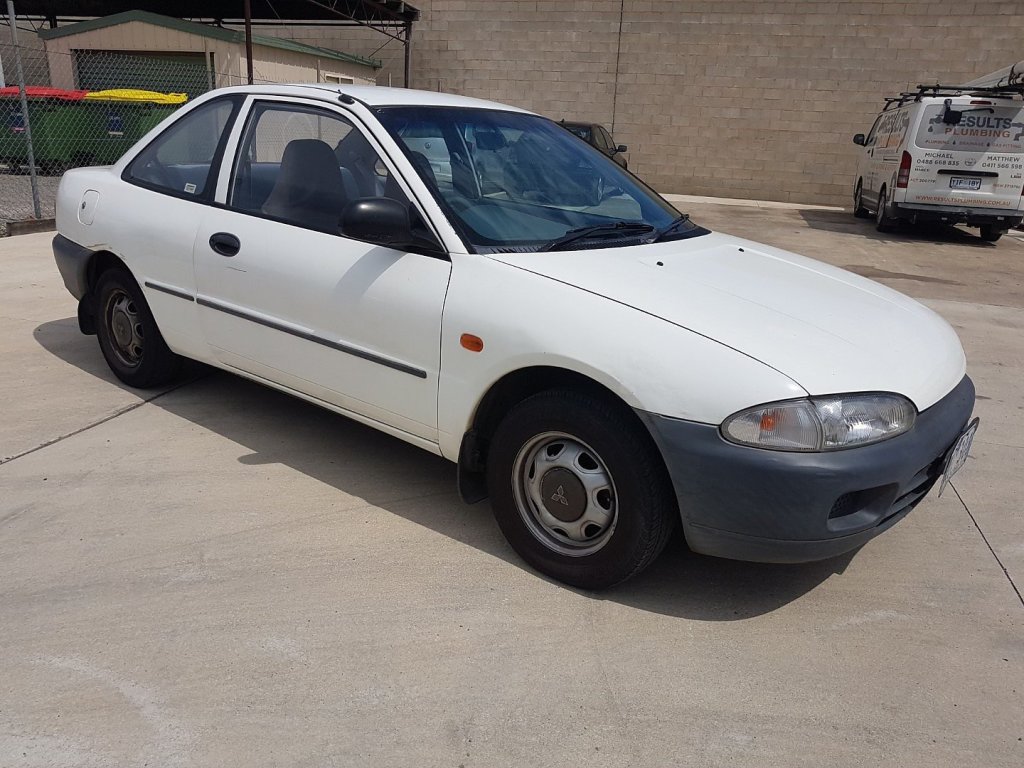
Also in the 90s, the late 90s after I’d bought a SEAT Ibiza, I looked at trading it in on a just-released Mitsubishi Lancer 3-door. This model had vinyl seats, plastic door trims, unpainted bumpers and not much else. The salesman at the Mt Gravatt dealer directed me to drive up Mt Gravatt itself, which I did as he extolled the virtues of the “anti-submarining” seats and drop-away engine mounts in an accident – things I’m 99% sure the SEAT already had.
The car did drive reasonably well, but the trade-in on my SEAT was truly awful. This was the first time I’d heard a salesman say my car didn’t “book well”, which I’m now presuming was a reference to car value guide Redbook. So, the SEAT stayed with me and got a canvas sunroof.
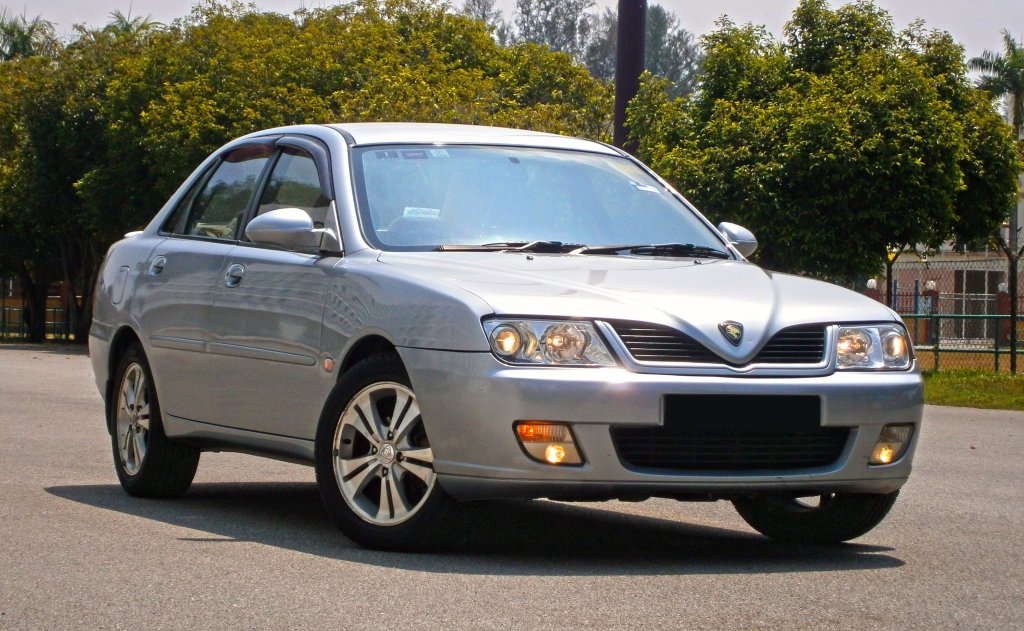
In 2008, as Beijing hosted the Olympics, I test drove a car I’d always wanted to experience, purely based on the chutzpah of the Proton chief who said it would sell well (at an inexplicably high price). The Proton’s problems were admittedly bigger than the model name – Waja – but it was fitted with leather seats and Lotus fettling, so I thought it was worth a look, especially at the rock bottom prices the circa 2000 models were fetching.
I turned up at the Moorooka dealer (the place with cars on dirt/road base that sold all the penny dreadfuls) and they got the Waja out for me. I’d only gone a few hundred metres up the road when I was stopped by a police roadside breath testing unit.
I was as sober as a judge (of cars) so I had no worries there. But just as I was about to drive off, an older copper stepped forward to issue me a ticket for driving with the windscreen view “obscured”: I’d allowed the car yard to leave the $5,990 price and features written on the glass. No amount of assurances that I could easily see enough to drive would persuade him. I called the yard and they sent a guy up to scrape off the paint texta. There was no offer from the yard to pay my fine. The test drive ended there.

In 2011, the opportunity/need to buy a new-ish car surfaced on a change of job, so I test drove a new Nissan Micra and a Holden Barina Spark – both around a $15,000 purchase, on-road. I also test drove a Chinese-made Chery J1, but the less said about that, the better.
The Micra drove well for a 3-cylinder light vehicle, however my wife said it was an “old lady’s car” – even in the gold colour I liked, with a roof spoiler – so that option went out the window. Then I went to the local Holden dealer to try out the new model I’d seen launched: the Barina Spark. At the time I didn’t realise it was the modern version of the Daewoo Matiz, sold by Holden under their dubious reselling of Korean cars. With its Italian styling and quirky engine I didn’t mind the Matiz – and with a motorcycle-inspired dash on the Spark, it also looked like a fun car to own (and you know I like micro-cars).
However a test drive soon showed up its shortcomings: in the engine and the driver’s seat. I didn’t expect the Spark to be a bright spark in performance, but it didn’t have much to work with at all, much like the Chery had seemed all-noise-and-no-action. The Micra had been a much better drive. Plus, my long legs were left hanging off the Spark’s seat, unsupported like sitting on a ledge. So that purchase didn’t happen and I bought a 5-year-old Citroen C4 which had huge amounts of leather trim and had seen huge depreciation.

I often look for cars via price, rather than model. That’s how eBay informed me around 2017 that a Chrysler LeBaron convertible was for sale, unregistered, at a Nambour dealer, for around $1500. This car wasn’t just interesting because it was American – someone had spent a small fortune on it, converting it to right-hand-drive. The roof worked and it ran just fine.
One strange result of the drive-side conversion was that the passenger now had heaps of controls for their electric seat plus bonus buttons for the power windows, while the (non-factory side) “driver” had very few controls to play with. The dealer said they just wanted enough to cover what they’d paid at auction, hence the keen price. Due to it being so rare, I chickened out on buying it – even though an internet search showed it was worth 2 or 3 times as much. Regrets, I’ve had a few.
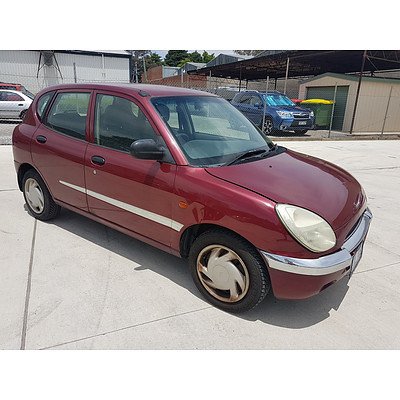
There are 8 million stories in the naked city – these have been some of them. In used cars sold privately, you can add in test drives of an 80s Ford Meteor, Mazda 121, 90s Volkswagen Passat, Daihatsu Sirion, Mercedes A-class, Holden Astra convertible, Land Rover Freelander and even an early 90s Holden Commodore (long before they were collectible).. plus fresh checks on cars I’ve (previously or subsequently) owned, like the Suzuki Mighty Boy, FSM Niki, Daihatsu Copen, Ford Ka, Range Rover and Toyota Corolla Seca.
Bertha Benz took the first test drive – I don’t think I’ve had my last.
You Always Remember Your First… Number Plate
My own very unscientific survey, spanning many years and workplaces, reveals plenty of people do, even if they have trouble remembering what’s on the car they own now.
Granted, remembering personalised plates (or “vanity plates”) that you choose yourself won’t get you very far with my argument here — although according to Netflix’s The Good Place, they will get you into The Bad Place.
After decades of driving, I can still remember the number plate on my first car in the late 80s: a 1977 Toyota Corolla sedan. The Toyota was bright yellow, and Queensland number plates for much of the 70s were black and white. So there was a bit of a bumblebee vibe going on with my ride.
As a car-mad teenager, at 3pm I would walk out of high school to my yellow freedom machine, parked on the street, and see that black-and-white plate beckoning me.

The rego was OZL-766. Yep, I couldn’t make a word out of it either. Still, it was better than an old Falcon a friend owned, which had the unfortunate number plate letter grouping: POO. “Here’s the poo!” we would say on his arrival. To make matters worse, that Falcon ‘might’ have been brown.
By the mid-70s, plates changed to the “Queensland — Sunshine State” slogan, and started with numbers instead of letters. And perhaps a transport bureaucrat decided to skip POO on the plates, this time around.
These days, plenty of plate combinations are skipped because they might be rude. Buying a personalised plate can sometimes be tricky if you own a 1969 model, or you were born in ’69. However, I can personally report that just a few years ago they were handing out regular number plates with the lettering “SAD”.
In an automotive tragedy, my first plate would end up lasting a lot longer than the Corolla. Within months of buying the car, much of the yellow paint bubbled up with “bog” filler and fresh rust spots. So it turned out, a rusty Corolla had been bodgied up to sell (for a little too much) to an unsuspecting first-time buyer.
I tried to repair the rust holes myself on my days off from uni, but after wrestling with one panel and not making a very good job of it, the Corolla was taken down to the local car yard to be traded in. My dad took pity on me, and helped pay for a slightly newer Mazda on the lot.
And I still remember the rego number of that one too.
These days I do my best to remember the plates on our cars, by making words out of them — whether they like it or not. So sometimes I drive BIB-ZIFFER, or even T-BITS-EYO.
If I really wanted to, today I could buy a black-and-white OZL-766 personalised number plate for hundreds of dollars.
But as they say: nostalgia ain’t what it used to be.
WD-40: well driven, 40 attempts
In 1953, US missiles needed protection from rust. At the same time, Rocket Chemical Company staff came up with a product that’s probably in your cupboard right now, and very protective of weapons of mass destruction: WD-40.
It wasn’t until their 40th attempt that they got the water displacement formula right. So, the name WD-40 stands for “water displacement, formulation successful in 40th attempt.”
Its formulation was never patented, so it would never be revealed publicly. WD-40 was sent to soldiers in Vietnam, to look after their weapons, and has even been used to free a tongue stuck to cold metal.
With my cars, I’ve also had experience with rust, water displacement spray, and the number 40. In late 2020, I brought home the 40th vehicle (in 33 years of driving) that I’ve bought for my own use. Cars bought with the wife only add to this list!

Number 40 is a familiar 4WD. I have owned a Land Rover Discovery (diesel) before, but this one has the V8 burble of my recently sold Range Rover, without the fussy electronics. It’s also a 3-door, which I’m told is rare these days – especially in the 90s series 1 update that I have. The paint is much, much better than my last Disco, but still not as good as the Rangie’s royal sheen.
But back to those 40 cars over 33 years. You can read here about how I was in a big rush to get my licence in January 1987 and how my first car was a rusted-out, bogged-up disappointment.
You might think, at more than a car a year, that I constantly bought cars – but I did keep one for around 10 years. In recent times, the internet certainly made it easier to be tempted to purchase (and sell) more often. Those search terms now make it easy to find a mostly unknown Niki, Grandeur or Copen. Back in the “olden days”, you had to use newspaper classifieds, spy cars for sale on the roadside or rely on word-of-mouth to find those “penny dreadful” cars that no-one else wants. That was the case for the first 7 cars I bought, until eBay and Gumtree tempted me for dozens more.
Do I have a favourite? No, I like all sorts of things about all sorts of cars I’ve owned. However, this post reveals the car I most regret selling, even now that I own one very similar in looks and features.
So, just in case you’ve never been to the ‘about‘ page, here is the list of 40 cars.. and counting. Unlike WD-40’s formulation, you can read all the details on my fleet below. Bring on WD-50!
1. 1977 TOYOTA COROLLA YELLOW (BOUGHT 1987)
2. 1981 MAZDA 323 WHITE (BOUGHT 1989)
3. 1989 DAIHATSU CHARADE GREY (BOUGHT NEW YEAR’S EVE 1991)
4. 1992 MAZDA 121 CANAIPA BLUE (1992 DEALER DEMO)
5. 1995 SEAT IBIZA RED (BOUGHT NEW 1995)
6. 1989 FSM NIKI – WHITE (BOUGHT 1996)
7. 1988 MITSUBISHI COLT BRONZE (BOUGHT 2003)
8. 1990 FSM NIKI – RED (BOUGHT 2004)
9. 2003 DAIHATSU COPEN GREEN (BOUGHT 2005)
10. 2001 FORD KA MAROON (BOUGHT 2007)
11. 1991 FORD CAPRI GREEN SPARKLE (BOUGHT 2007)
12. 2000 HYUNDAI GRANDEUR BLACK (BOUGHT 2008)
13. 2002 SMART CITYCOUPE RED/BLACK (BOUGHT 2009)
14. 1994 DAEWOO 1.5 SILVER (BOUGHT 2009)
15. 1991 HYUNDAI LANTRA WHITE (BOUGHT 2009)
16. 2000 VW NEW BEETLE RED (BOUGHT CHRISTMAS EVE 2010)
17. 1993 HOLDEN BARINA WHITE (BOUGHT 2011)
18. 1990 DAIHATSU CHARADE WHITE (BOUGHT 2011)
19. 2006 CITROEN C4 DARK BLUE (BOUGHT 2011)
20. 1996 FORD FESTIVA WHITE (BOUGHT 2012)
21. 2004 PROTON GEN2 ORANGE (BOUGHT 2012)
22. 1996 FORD FESTIVA BLUE (BOUGHT 2013)
23. 1992 RENAULT 19 CHAMADE SILVER (BOUGHT 2013)
24. 1986 SUZUKI MIGHTY BOY BLUE/WHITE (BOUGHT 2013)
25. 1996 LAND ROVER DISCOVERY GREEN (BOUGHT 2013)
26. 1996 HOLDEN BARINA WHITE (BOUGHT 2014)
27. 1992 TOYOTA CAMRY MAROON (BOUGHT 2015)
28, 1995 MITSUBISHI VERADA VXI DARK BLUE (BOUGHT 2015)
29. 2003 PEUGEOT 206 WHITE (BOUGHT 2016)
30. 1996 RANGE ROVER HSE V8 GREEN (BOUGHT 2016)
31. 1985 SUBARU VORTEX XT BLUE (BOUGHT 2018)
32. 1985 SUBARU VORTEX WHITE (LEFT IN A BARN – BOUGHT 2018)
33. 1990 HOLDEN BARINA GS WHITE (BOUGHT 2018)
34. 2004 SAAB 9-3 LINEAR SPORT 1.8T SILVER (BOUGHT 2019)
35. 1996 FORD TAURUS GHIA MAROON (BOUGHT 2019)
36. 2003 SAAB 9-3 ARC SPORT 2.0T SILVER (BOUGHT 2019)
37. 1999 HONDA HR-V 1.6 WHITE (BOUGHT 2019)
38. 2001 CHRYSLER PT CRUISER LIMITED SILVER (BOUGHT 2020)
39. 1998 MGF ROADSTER BRITISH RACING GREEN (BOUGHT 2020)
40. 1995 LAND ROVER DISCOVERY 1 V8 IN GREEN (BOUGHT 2020)
..and more since this post.

Daewoo a dog’s breakfast
Toto the dog’s appearance in “The Wizard of Oz” wasn’t her first film – the Cairn Terrier had already appeared in half a dozen movies by 1939, as “Terry”. Her name was changed to Toto because of the success of the Oz movie. She died 6 years later, and was buried on her owner’s LA ranch.. only to have her grave destroyed during the construction of a freeway in the late 50s.
However in 1994, it was a win for dogs over cars, with South Korean brand Daewoo using a cattle dog in their advertising campaign, as they set up in Australia. Cane the dog appeared in cheeky newspaper and TV spots for a few years, until Daewoo ads became more upmarket.
A drop in sales before the brand’s shutdown has been blamed on campaigns without Cane.

Wikimedia photo: Eva Holderegger Walser
I wasn’t thinking of Cane when I bought a grey 1994 Daewoo 1.5i off eBay in 2009 – I was marvelling at the price of this 15-year-old car with under 100,000 kilometres. It was up for auction by a Gold Coast dealer, starting at $950, including the roadworthy and remaining registration. So I put in the first bid (sight unseen), and the auction finished without any competition. I’d been looking for a cheap runaround car that carried more people than my Smart car, and even my local mechanic was surprised at the clean condition and price of it.
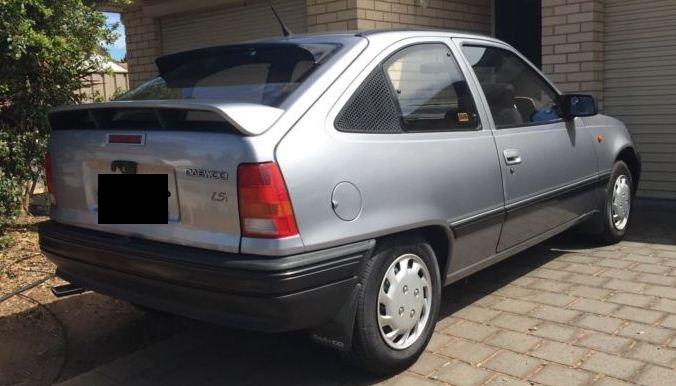
A similar Daewoo 1.5i
It wasn’t exciting to drive, its seats were flat and it had a strange smell from the air vents (dead gecko, maybe?) but it did the job. The 1.5i was Daewoo’s version of the 1980s GM-Opel Kadett, so it was already an ‘old’ car when new in Australia. A look at the dashboard plastics would easily confirm this. After only a year or so, an updated model (now known as a Cielo) was released around the world, including in Australia. By the late 90s Daewoo was a popular brand, selling over 20,000 cars a year in Australia.

Strange seat fabric design
However the Asian Economic Crisis was the end of the “original” Daewoo. The struggling company was taken over by GM and Holden in 2002, and then – with falling sales – shut down as a car brand here in 2004. It went on to supply a conga line of forgettable Holden cars like the Viva, Epica and Malibu.. as well as replace the Barina and supply the quality-plagued Captiva.
With constant complaints from the kids about trips in the “smelly” car with no air conditioning, when the registration came due, I chose not to renew it. In selling it, a couple of things would need to be done for the roadworthy (a new windscreen among them) so I put it back on eBay as an unregistered car. A buyer agreed to the $750 asking price, and lived half an hour away. He drove down to inspect it and pay me, then followed me as I drove it to his place, and drove me home again.

A similar Daewoo 1.5i
So in the end, with rego included in the initial sale to me, this Daewoo hadn’t really cost me anything to own. It was in and out of my life in a matter of months. And in terms of discovering new country in memorable cars – as Dorothy said to Toto in “The Wizard of Oz”, we weren’t in Kansas anymore.
Little Pug became White Elephant
The term “white elephant” – meaning something you can’t get rid of, even though it’s costing you money – comes from the tradition of kings in southeast Asia keeping white elephants as a show of power and prosperity.
They occasionally gave a gift of a white elephant, which was seen as both a blessing and a curse. While it was an honour to receive the gift, the sacred animals couldn’t be put to work and were expensive to maintain.
Even circus legend and “The Greatest Showman” P.T. Barnum ended up with his own white elephant – literally and figuratively. After spending a huge amount of money to get one from the King of Siam, he discovered his “white elephant” was in fact grey, with pink spots.
And in mid-2016 I ended up with one on my driveway – in the form of a 2003 Peugeot 206.
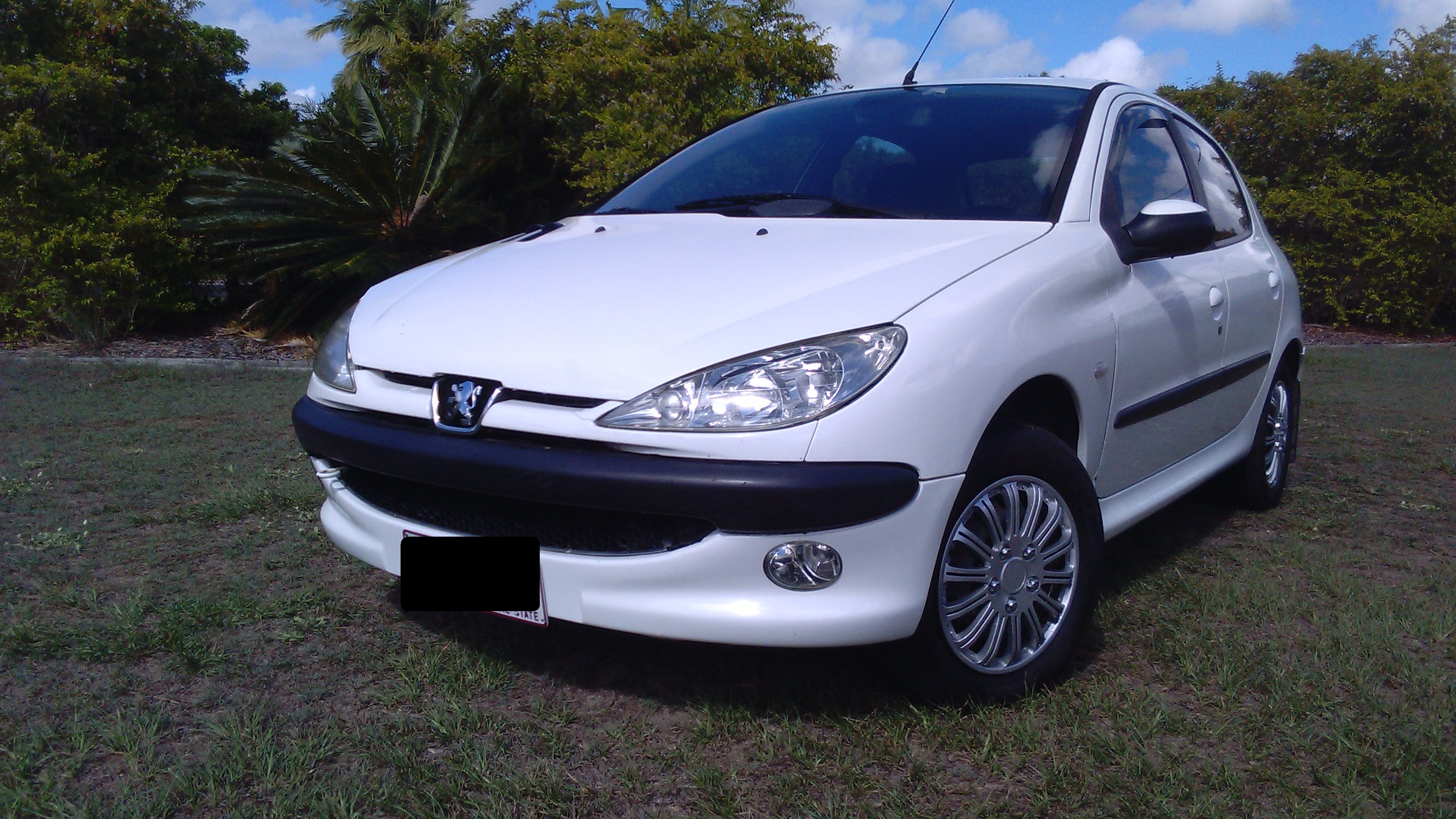
My daughter was after a more modern car to replace her first ride, and (unfortunately) I spotted this unregistered French hatchback on Gumtree, for $800. So we went to Caloundra to look at it.
A number of internal alarm bells went off for me during the inspection – starting with the man selling it (“Pat” the laid-back muso was a bit vague on the history of the car, saying his son had been driving it, and he assured me its bad clutch was a characteristic of Peugeots). The Pug needed plenty more work: it had a damaged front passenger panel from a “minor” bingle, worn tyres, plus no spare tyre – or even a gearstick top. Despite my repeated warnings about the cost of repair, my (adult) daughter maintained her interest in buying it. My wife (who later dubbed it the white elephant) says she would have simply dragged her away from the place!
Just before we handed over the cash, I asked my daughter to do a federal government PPSR search on the car with her phone: this would check whether the car was stolen or written-off. After spending $3 and waiting a minute, the website came back, saying the Pug wasn’t stolen. So money was exchanged and she drove the car home on a permit.
The next day we took a closer look at the PPSR certificate, seeing this:

This was the bit she hadn’t seen, further down her phone screen – that the Pug had been written off 2 years earlier following an accident, but it was “repairable” damage. However after any repairs, the car would still need a “written-off vehicle inspection” (WOVI), costing close to $450.
I rang Pat, and accused him of selling a dodgy car. He claimed he didn’t know about it being written-off, and he’d been given the Pug to settle a debt. However he couldn’t remember the name of the person who’d handed it over. I told him he should refund my daughter, but he said the money had already been spent on “music equipment”. In the end, it was our word against his, and I would spell out what happened in a Statutory Declaration at the written-off inspection.
A mechanic took a look at the car and said while it ran well, the chassis crash repair looked like a backyard job, and the clutch was too far gone – so both would need to be sorted before getting the Pug registered.
My daughter now didn’t want the car, and planned to sell it – as a write-off – for a few hundred dollars. However I foolishly told her I’d pay her a few hundred for it, and get it fixed for myself.

After $450 chassis work at the panel beaters, 4 new tyres, a spare wheel found at the wreckers and a whopping $2,000 on a new clutch and front suspension, the Pug was ready for the written-off WOVI inspection – which it easily passed in early 2017.
It drove very well and spritely with the 1.6 litre engine, plus it sat securely on the road like the VW-based cars I’d owned in the past. The air conditioning worked a treat. It even featured automatic headlights and rain-sensing wipers.

However, it wasn’t a car I’d wanted to own – and it had caused me hip pocket pain.
So after driving it for a while, it went on the net for sale – initially for what it owed me, then at a more realistic price. Once the price was lowered just before Christmas, I had more than a dozen buyers asking about it. A couple looking for a spare car made an offer, and I accepted.
I wasn’t sad to see the Pug drive off: like P.T. Barnum’s own white elephant, mine was also a dirty grey colour from sitting out in the weather, and just as much of a money pit.
 Classic and Clunker