Category: Classic
Long lost luxury, part 1
In the meat industry, a butcher might offer mutton dressed up as lamb. In the motoring industry, Mitsubishi once took the body of an everyday 4-cylinder Magna and charged nearly double the price for a V6 version.

It was the Mitsubishi Verada, and it had: one airbag! Anti-lock brakes! An electrically-adjustable driver’s seat! Climate control aircon! And two-tone paint with fancy wheels.
I bought one well-preserved example from an older man who was only the second owner. The first owner had paid $50,000 for this 1995 Australian-made sedan (you could buy land in Brisbane for less than that at the time!), and the second had saved quite a bit by buying it a few years later. When I came along, the Verada was 20 years old, and up for sale unregistered.
It looked good in the Gumtree pictures, except for a dent from a bollard in the front driver’s side fender panel. When I arrived to inspect it, the car was parked on carpet in his garage, and the engine looked clean enough to eat off.

He made a point of telling me he’d disconnected the electric aerial, as he didn’t like the noise of it going up and down when he turned the radio on.
This was a car that had been pampered under his ownership, with some serious money spent on a rebuilt V6 engine just 40,000 kms ago. So even though the odometer said 178-something, the new engine had barely been used in the 8 years since it was installed.
It was clean inside too, with carpets undamaged, and velour seats that had never been stained. So for $550 delivered to my door unregistered, it seemed like a good deal. To me, at least – no-one else in the family liked it.

That’s not to say it didn’t need anything done – rear brakes and some bump stops for the shockies were on the roadworthy list, the original radio cut out and needed fixing, and while it was for sale it developed a hole in the exhaust (the result of the former owner not driving it enough to burn off moisture in the pipe, I was told).
But the biggest repair job was the dent in the fender – I was quoted $750 by a crash repairer, before finding a small dent removal firm that could do it for $450.

So by the time it was up for sale, the money spent had gone well past $2,000. And, strangely, it took a long time to sell – so long I had to re-register it for another 6 months. I ended up taking any reference to a “new” engine out of the ad, as a contact in the car yard game said it was better to say “great mechanical condition” than “this car had a new engine”.
The Verada was my smooth everyday drive, until I sold it to a local couple as their second car. I made no profit (technically a slight loss), but it went to a good home. There was no lamb on the dinner table that night..
SEAT Ibiza: The Price Is Right
If you watched Aussie afternoon TV in the mid-1990s, you will have seen Larry Emdur hosting “The Price Is Right” on Channel 9. Every day the show would excitedly unveil the showcase’s major model-draped prize – “It’s a new car!” – which just happened to be a Spanish vehicle made by the VW-owned SEAT (pronounced “say-it”). The prize voiceover ended each time with “It’s a SEAT, si!”
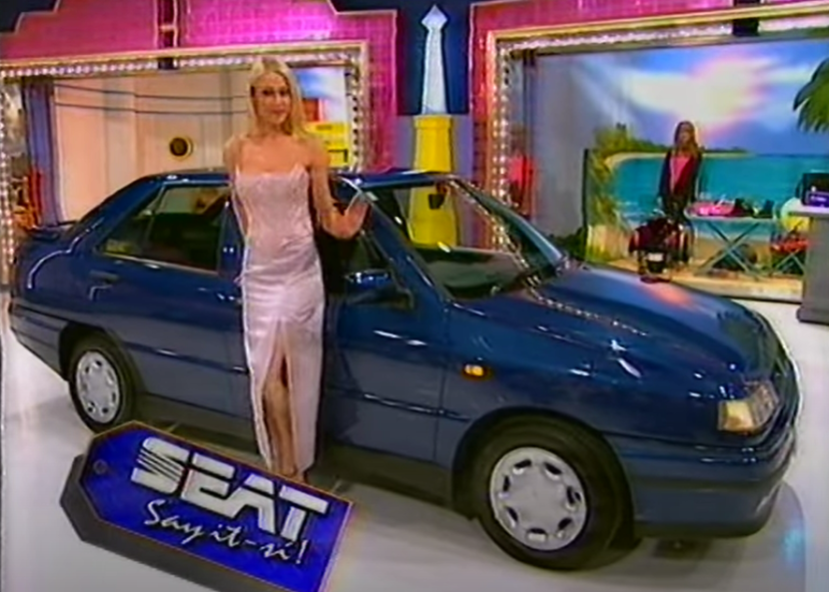
So I was well aware of the brand when in late 1995 I decided to treat myself to a new car (this was BK, or Before Kids). I’d seen a SEAT dealership while driving through Indooroopilly, but never thought about buying one of these Volkswagen-based cars. That was, until I went to a nearby Hyundai dealer to look at an Excel.
The Hyundai salesman helpfully gave me a copy of a magazine article comparing the Excel with the Ibiza and (I think) a Festiva, Charade and Barina. So, a 4-cylinder face off. The article sang the praises of the 1.5 litre Excel on price and value, while casually mentioning that the 1.4 litre Ibiza was a worthy (if unusual) competitor. An unusual car? I was sold.
So I went across the road to the SEAT dealer, and took the VW Polo-based Ibiza (the sporty 2.0 GTI model) for a test drive up Mt Coot-tha. It handled really well, had a great feel to the clutch and gearshift, and felt very solid when you shut the door (all areas where I felt the Excel had failed).
When it came to a basic spec 44 kW CLX model in my $15,000 price range, the saleswoman desperately tried to get me interested in a white 3-door they had on the floor. But it had black bumpers, and I said it looked like a Pizza Hut delivery car. So with my 3-year-old Mazda 121 as a trade-in, there was a price she nominated for a red one they’d order in for me.. and she repeated again and again “this is the best price I can do”. Incidentally, the changeover price for the more expensive Ibiza was the same as the changeover on the cheaper Excel – I was basically getting a better trade-in price to buy European.
However it wasn’t a good enough price for me – and I hadn’t really enjoyed the pressure she put on me for the white car. So I went to another SEAT dealer, this time at Springwood.
I walked in and said to the salesman “if you can beat this price, I’ll buy a SEAT Ibiza off you today”. He said “I can, if you buy that red one over there”. Done deal, and for late on a Saturday afternoon, I’ll bet he got his motor running with a celebration that night. (Little did I know that in around 2 months, SEAT dealers would be closing due to sluggish sales).
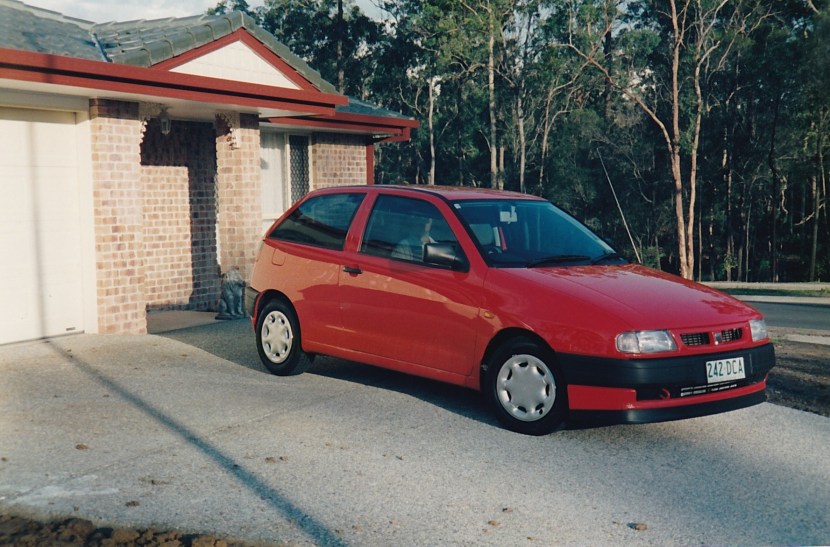
Later that day, the saleswoman from Indooroopilly rang me, and I told her I’d signed up for an Ibiza at Springwood. “Cancel the deal – I’ll beat the price!” she told me – but I reminded her that she’d vowed she couldn’t better her deal, and I wasn’t going to pull out of the contract now.
So the gleaming red Ibiza came home, leaked a little wax out of the door and hatchback drain holes (put in there to resist salt on icy roads in Europe) and got some door rattles fixed under warranty (at a VW dealer) – but was a very solid and enjoyable drive, despite the paltry engine power.
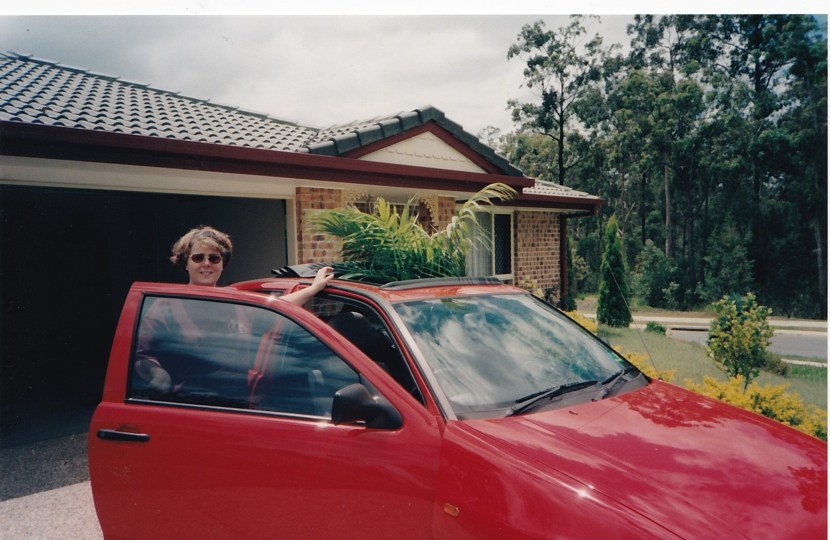
Of course as a relatively unknown brand, it lost value very quickly, and I ended up keeping it for nearly 10 years because the trade-in values on other cars were truly offensive. In 1997, I paid nearly a thousand dollars to have an electric vinyl sunroof put in, which opened up the entire roof, and also made it easy to transport palm trees from the nursery to home:
In mid-2005, with 230,000 kilometres on the clock and a Copen in the driveway, it was time to sell the Ibiza, so it went on eBay for a little over $2,000. A young man loved the car and its sunroof, and paid nearly what I’d been asking. For this Ibiza, the price was right.
Niki tricks me twice – but I love it
In 1989 a car importer somehow convinced federal automotive authorities to allow the sale of a tiny Fiat 126 clone car, made in Poland as that country said goodbye to communism. The F.S.M. Niki was weird, cheap, and I desperately wanted one.
At $7,990 it was billed as Australia’s cheapest car:
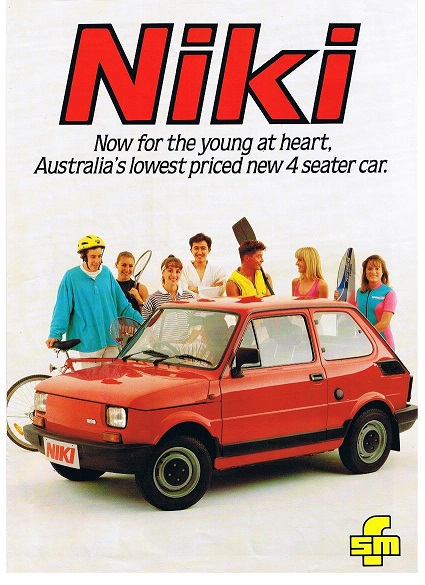
I first test drove a brand new blue one (they only came in red, white and blue) in 1990, when I owned a 9-year-old Mazda 323 as my second car. The Niki wobbled with its 2-cylinder air-cooled engine in the back (like a Beetle’s), but the quirks of starting, steering and driving it were fun for me. You had to squeeze your accelerator foot against the front wheel arch to make it go. It had no synchromesh on 1st gear, so you had to be at a complete stop to put it in 1st, or you’d hear a dreadful noise from the gearbox. It had little triangular windows in the doors, that pivoted to let air in. Both attributes straight out of the 1960s.
Even though the Mazda had cost around $9,000 just a year before, the MacGregor dealer would only give me around $4,500 trade-in on a new Niki. For a uni student working part-time at Coles, the transaction was never going to happen. So I waited.
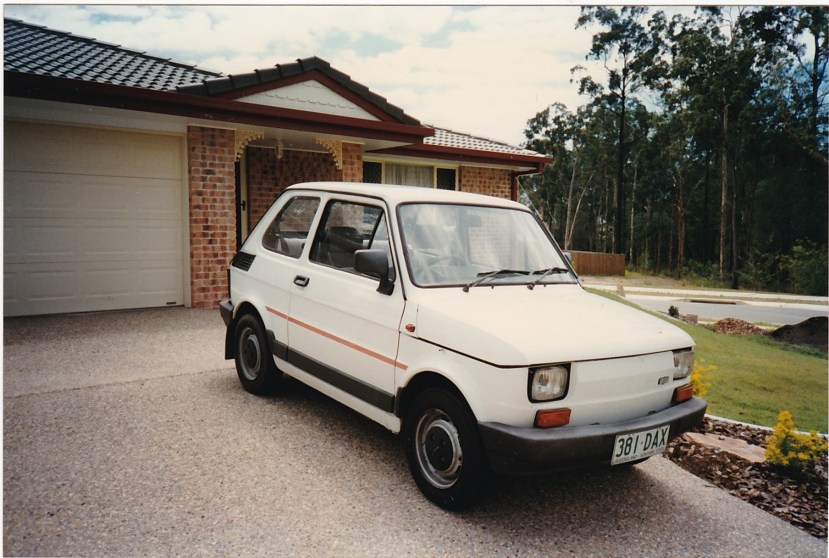
Then in mid-1996, a business on the “Magic Mile” in Moorooka advertised in the paper that they had a second-hand white one for sale for $5,000. I turned up to inspect the car, which turned out to be on sale at a motorcycle shop, overseen by two burly men with big beards, and no doubt a deep suspicion of the young man who wanted to buy the Niki. The test drive was comical, as one of the men accompanied me, dwarfing me in the driver’s seat. But he knew I meant business, when I revealed I knew how to start it (full choke), how to open the boot under the front bonnet, and how to avoid crunching 1st gear.
So, with an almost-new Seat Ibiza in the driveway, I then also owned a Niki, which I drove from Brisbane’s western suburbs to an Ipswich radio station each morning – at 100 km/h on the motorway. On cold mornings, you opened up the valve between the front seats, to let hot air from the engine into the car (yes, it did smell).
I also drove it home from Ipswich at 100 km/h each day, dodging trucks and laughing at speed cameras. The car’s top speed was barely over 100, and it took over 30 seconds to get there.
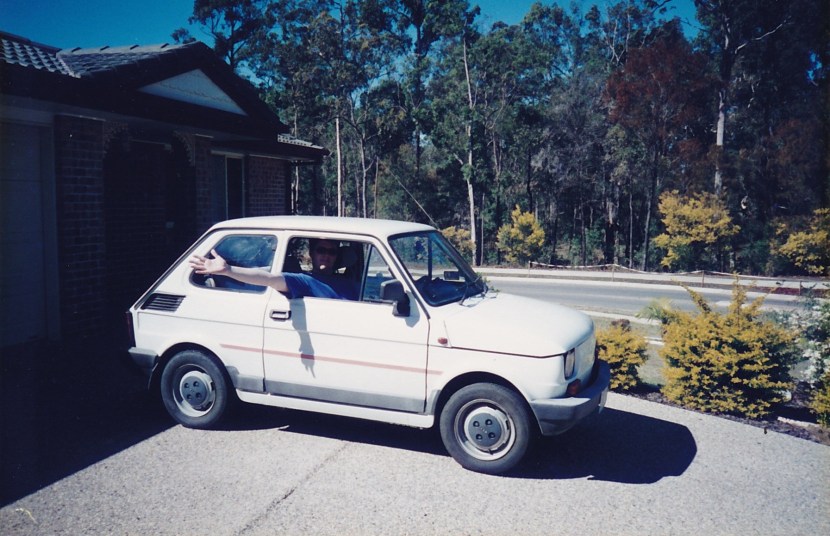
After a year or so, with a baby on the way, it was time to sell the white Niki. I put it in the Trading Post, as this was pre-internet for me, and a southside resident paid quite well for the car, which was starting to show a little rust. But I kept my eye on the Niki market.
In 2004, eBay was well and truly in business and I saw a red Niki listed for a low starting price. I watched the auction, and ended up buying the car for $416 – delivered. This Niki was even quirkier: it had a problem with the ignition barrel, meaning you had to flick a switch under the steering wheel and press a hidden button to start it. I got it registered, and began driving it around. On a trip into Brisbane one weekend, its former owners spotted it, and waved from another car.
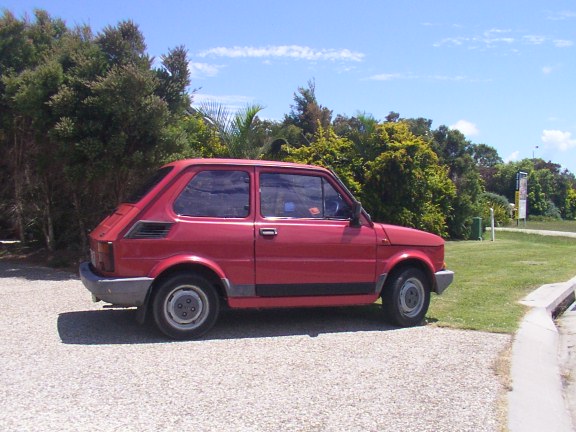
This Niki was also suffering rust – around the front and back windscreens. A Fiat mechanic told me they have a “wet seal” which means water hangs around in the rubber surrounding the windows, so they are prone to rust there. I paid a local body shop to take out the rust, then later a family member drove it to uni, and only spun out once! (Nikis are a little heavy in the back with the engine there, so are an “adventure” to drive in the wet)

In 2005, after having bought the Copen I had too many cars, and put the Niki on eBay. Incredibly, it was bought by a man in Sydney, who paid half of its $900 sale price via bank transfer before I took it to a car transporter, then put the other $450 in the bank once he’d rung the company to confirm the car was there.
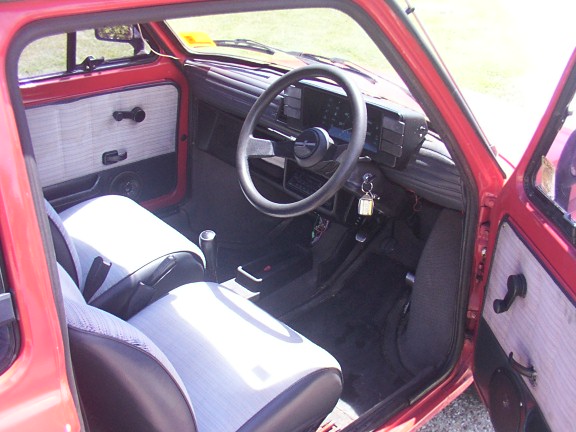
I still keep an eye out for Nikis. A few years ago I looked at one on the Sunshine Coast, which a father and son had restored and painted bright yellow. It was later driven to Sydney by a new owner.
Sure it’s not safe – it’s small, slow, strange and smelly – but never boring to drive. A Niki could trick me again.
Update: in March 2021 I noticed a cared-for Niki for sale, around 200 kilometres away from me. You just know I bought it, right?
Watch the YouTube walkaround here
Festiva was not-so-sad
“$300 buy it now, drives but unregistered, needs a few things done to it” was how eBay brought me together with the Ford Festiva.

With an offer like that, I pressed “buy it now” and drove this white mid-90s manual Festiva home from Caloundra on an unregistered permit. With it being such a common car, and only 300 bucks, I didn’t think I was risking much. My biggest worry at the time was looking suspicious by filling it up at a local service station, with no number plates attached.
Sure, it had some minor dents on the driver’s side and black scratches on the painted bumpers, but it scrubbed up OK after I washed, vacuumed and polished it, and sprayed some white touch-up paint to the corners.
A lesson in selling, and international politics
My introduction to the Ford Festiva came in 1992, when I was looking to buy my first new car. The experience gave me a lesson in the art of selling, as well as international politics. Let me explain:
When the salesman at Ford showed me the Festiva, he asked me what else I’d been looking at. I told him I’d taken a Hyundai Excel for a test drive. “The worry I’d have with the Hyundai,” he said very confidently, “is that there’s a lot of tension on the Korean peninsula, and if North and South start firing, you’re not going to be able to get any parts for your Hyundai.” The great lie – or ignorance – behind his warning was that the Festiva he wanted to sell me was also made in Korea – by Kia. I wish I’d been aware of that at the time, so I could have pointed it out to him.
Anyway, 20 years on North and South Korea were still technically at war, but not battling it out, and I had a Mazda-designed, Kia-built, Ford-marketed Festiva in my driveway, that I needed to get fixed up.
 A mechanical inspection for the roadworthy revealed it needed some new linkages for the gearbox (it was quite rubbery on the drive home), some plastic stalks to hold the driver and passenger seat belt anchors upright next to the seats (they all break due to use of cheap plastic) and, from memory, maybe a new tyre and rubber boot or two.

Other than that, it was cosmetic work – with some new hubcaps, plus floor mats and seat covers to hide some dirt.
The only downside to getting it registered came in the form of a piece of metal attached at either end of the car:
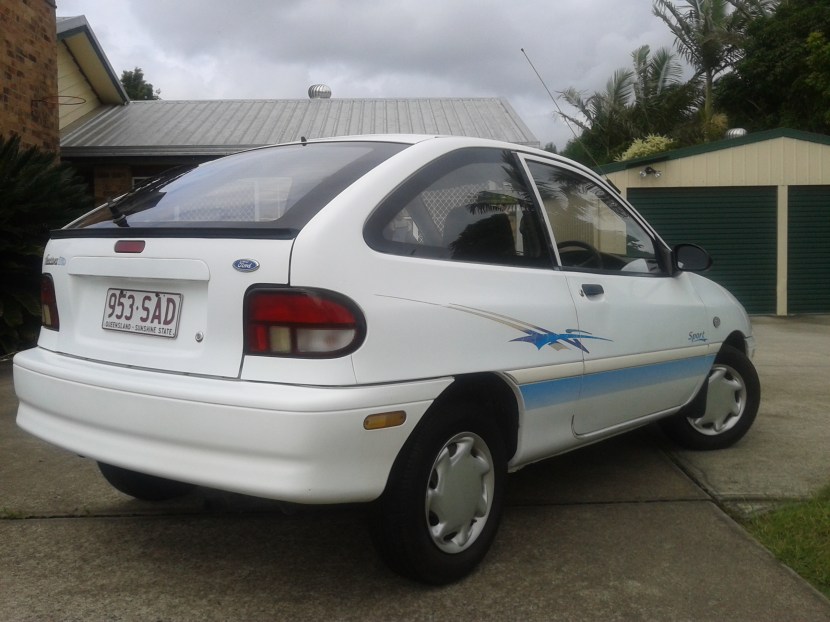
It was the number plate “SAD”.
In 2012 Queensland plates were up to starting with ‘S’, and when I got the Festiva registered, it wasn’t good to see that 3-letter word. It meant that after doing school runs and local trips for a while, I would then be trying to sell a “sad” car.
Still, the Festiva drove quite nicely for a 200,000 km+ example, and it wasn’t long before it was sold to someone who didn’t even comment on the number plate. After all the repairs, I made a small profit.. meaning this SAD little car had made me happy.
A Trajet in 7 seats
Five-seater cars are built to accommodate 5 people for a trip, but a 7-seater will make those 5 people a lot happier about that trip – and maybe they can bring a friend too.
That was the rationale behind our purchase of a used “Family Truckster” in 2009.
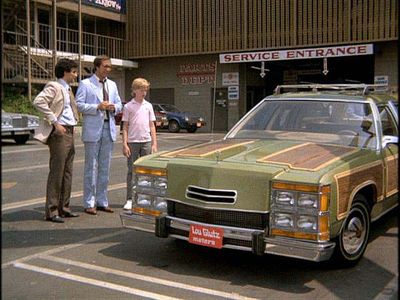
No, not the kind where you say “think you hate it now? Just wait until you drive it” from National Lampoon. This was a large 7-seater called a Trajet, built by Hyundai on the medium car Sonata platform – and using the same 2.7 litre V6 engine.

This vehicle made sense, even if the name didn’t. So many times we heard it called a Tra-jett, as in tragedy – it’s pronounced “trah-jay” (derived from the French term for “travel from one point to another”).
Sure, it’s rare on the roads (not on sale for some years now, replaced by an even bigger contender in the iMax); we didn’t even know it existed until we searched for 7-seaters on the internet. We had been considering the all-conquering Kia Carnival, but as it turned out we were very glad we didn’t go down that well-travelled road.
Our World Cup edition (complete with special decals!) was 3 years old when we bought it, and had travelled a mere 17,000kms or so as a company car. It had 4 conventional doors (not sliding back ones) so it was easy for kids to open and close.. and 3 reasonable back seats – although only a lap seat belt in the middle.

You sat up high, but there was a weird foot-operated parking brake, and the auto transmission selector was up next to the steering wheel, not on the floor (to appeal to the US market, I’ve heard). However the V6 was smooth to use – although a little thirsty if you drove it like you’d stolen it from a school dropoff zone.

But this World Cup edition Trajet had a secret weapon:
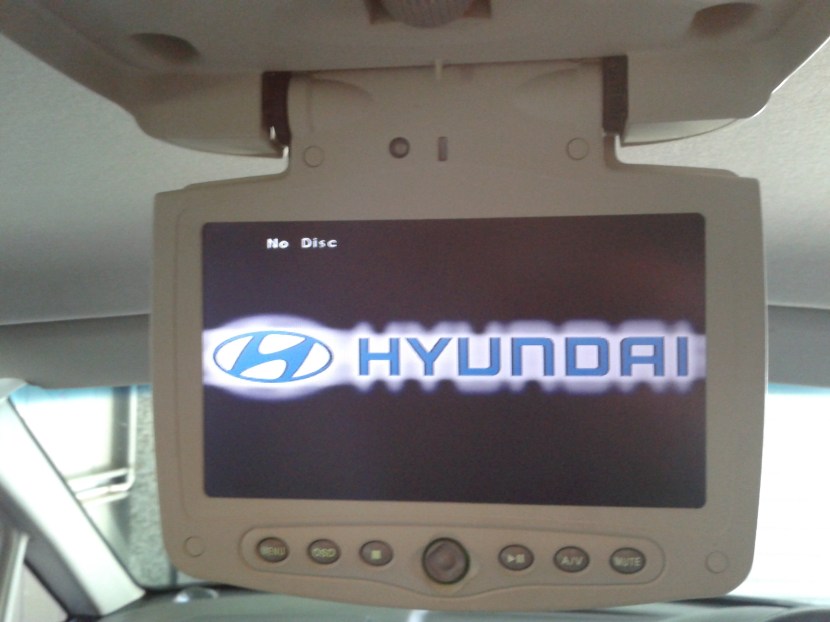
A DVD player fitted to the roof, with an FM audio system and even infra-red wireless headphones for 2 passengers, should the others not wish to listen to the movie soundtrack. With 3 pre-teens, this was one of the biggest highlights of ownership.
But by late 2015, with our oldest 17 and not accompanying us on trips so much, we decided it was time to hand the Trajet onto another family. Driving a 7-seater when there are only 2 or 3 people inside is a waste of petrol, and space.
So we put it on the internet, and after some months (and price reductions) we sold it to a young family. It took a while to sell, because no-one’s ever heard of a Trajet – even though I did advertise it with the keyword text “not Carnival, Tarago..”
So now we’re back to 5 seats for the family ride, and the prevalence of iPods/iPhones/iPads mean we don’t even miss the DVD. But to have missed out on owning this Trajet would have been a tragedy. See what I did there?

The Ford Capri, and me
My first up-close look at a Ford Capri was in 1992, when the radio station I worked for gave one away to a “lucky listener”. Then in the mid-90s I hired one for a day, and drove it to Bribie Island with some companions. By this time, the Capri was no longer made, and was depreciating fast. That didn’t stop a young whippersnapper on a bike yelling “rich bastards!” at us, while we cruised around with the top down. The car was probably worth less than half the value of his dad’s car.
After I sold my Daihatsu Copen in 2007 I still had a hankering for a “drop top”, so I thought I’d finally own one of these much-maligned, Australian-made, Mazda 323-based convertibles. A lot on offer had been abused, leaked via the roof, or were suffering the effects of sitting out in the sun too long with the top down (cracked plastics, ruined carpet, dirty seats).
But then, on Carsales, I found one sparkling example of a Ford Capri:
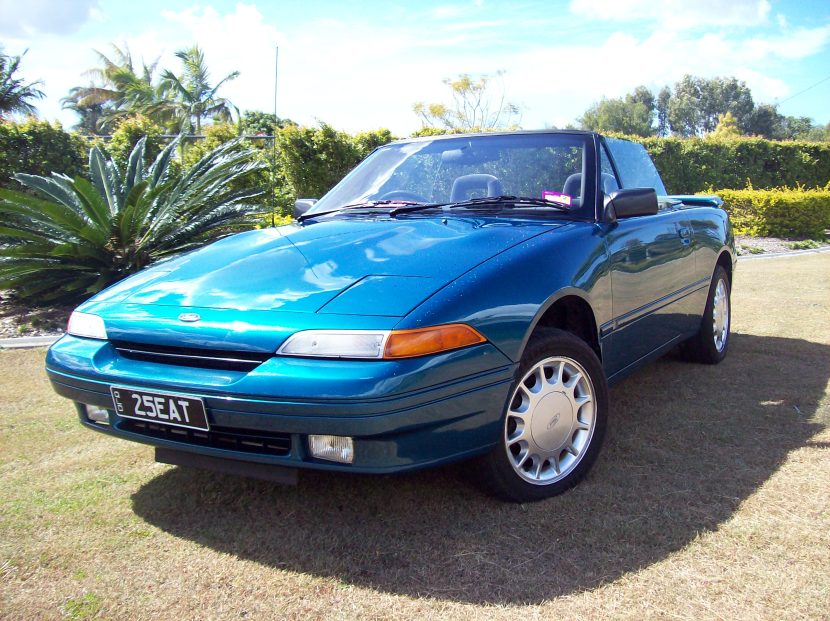
And it literally was sparkling, because a previous owner had repainted the entire car, and added a little sparkle to the lacquer. So in the sun it not only reflected the light in the paint, it made its own rainbow.
The seats and carpet of this Capri Verdi had been replaced, and the car had been put up for sale by a doting dad, who’d bought it for his daughter and had all the radiator hoses replaced on it, to reduce the chances of breakdowns. So for $5,000 it was a bargain when compared to slightly cheaper Capris that had had a hard life.
The only thing I wasn’t keen on, was the white soft top (most had a black roof).
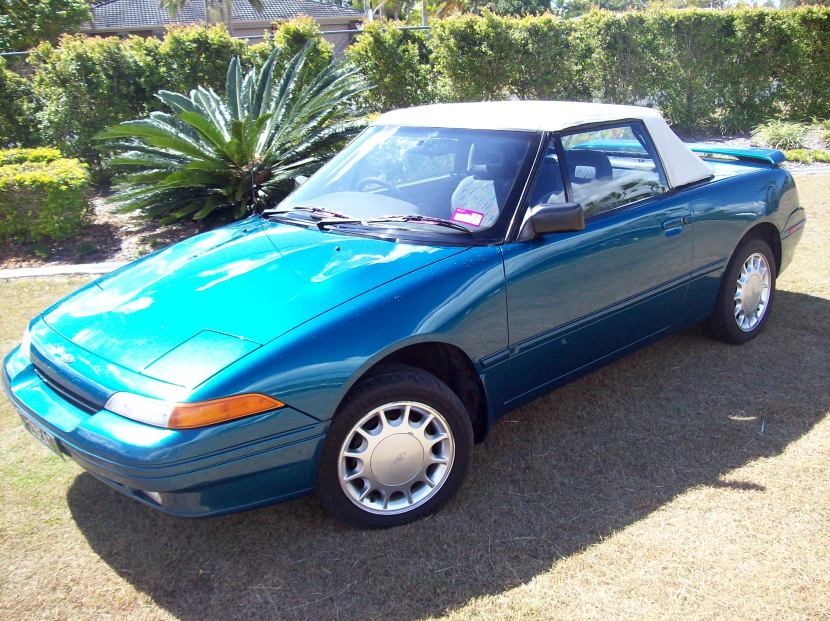
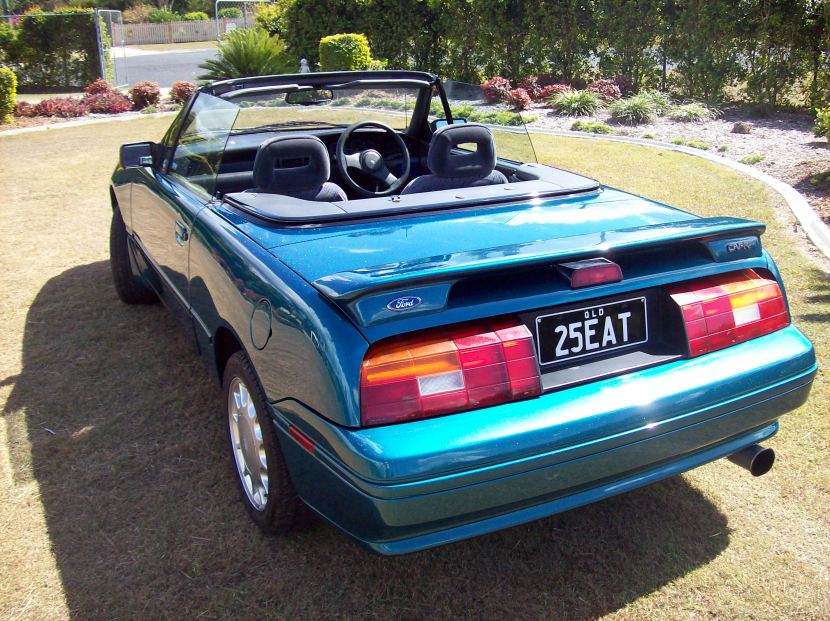
There was one more feature of this car – and it was also related to light: under the car were four purple neon strip lights, that you could turn on for a constant glow, or set to flash in time with the music coming from the stereo system. The car was showy enough without this feature, so I never turned it on.
Convertibles can suffer from not having a roof to strengthen the car – they can “scuttle” over road bumps, and doors can rattle in their locks. The Capri had both of these habits, but on a good road with the top down, it was nice to drive, in a Japanese-front wheel drive-does-everything-it-should-but-nothing-more kind of way.
Putting the roof down required getting out of the seat, going around to the passenger side to put a key in a special lock for the back cover panel (on the passenger side because most Capris were built for the left-hand-drive U.S. market, and sold as a Mercury), and then carefully lining up and loading the roof into the compartment behind the rear seat.

One person could do it – but it was easier with two, especially when putting up the roof.
As nice as my Capri was, I just didn’t have a deep love for it, and as the engine hit the 230,000s I thought it was time to move it on.
So it went on the internet, and after a few weeks a young lady came over to look at it, and had to have it – bizarrely, I think it was the neon lights under the car that clinched the deal. She picked it up at dusk, and drove off down the street with a purple haze under her new ride. But this car was more Frankie Goes To Hollywood.. than Hendrix.
Not Copen with it being gone..
There’s a running joke in our family, that I often say “I should never have sold that car”. If I put a dollar in a jar every time someone brought it up, by now I’d have enough money to buy “that” car back.
Some cars I have no problem selling, either because I fall out of love with them, or life changes and it doesn’t make sense to own them any more. However I believe the Daihatsu Copen is the car which prompted me to first coin the phrase “should never have sold that car..”

I had good reasons to sell it – we had moved house, and it was now parked in a gecko-filled, dusty garage next to the house (not the clean, gyprocked garage in our former house) and I also had a big credit card bill to pay off after moving.
Also, IT’S JUST A CAR… And there’s that saying “if you love something, set it free.. If it comes back to you, it’s yours. If it doesn’t, it never was”. It did (almost) come back to me – but more on that later.
I first saw a Copen in the flesh at a motor show in 2003, and knew that I had to have its tiny, convertible cleverness. It had the styling cues of an Audi TT or Porsche 356 roadster, but at a fraction of the price. Still, to buy one new was going to cost close to $30,000 – and I couldn’t spend that much.

As I was pining after it, in early 2005 Daihatsu announced it would be shutting down in Australia – and then I knew prices would be coming down. I talked to a dealer about a new one, which was now more like $25k as they cleared them out. He even let me take one home overnight (hoping I couldn’t hand it back) but the price was still too steep. So I decided to wait for a second-hand one to come up.
In 2005 the internet was growing, but there was still a booming market for newspaper ads – even for cars. I hadn’t found any affordable Copens online, but then one Saturday morning late in 2005 I saw one advertised in the paper at a local used caryard – for $18,000. Worth a look, even if I still wasn’t happy with the price.
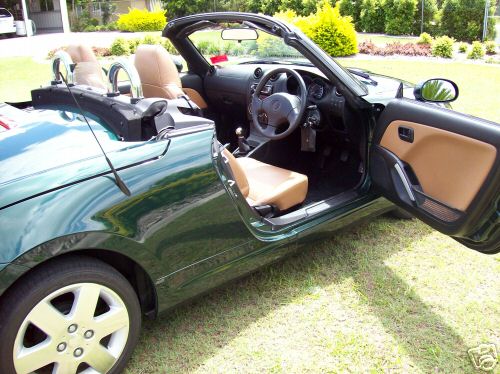
So I looked – and loved, loved, loved.. It was a one-owner 2003 Copen in racing green with a spoiler, 35k on the clock and the previous owner had taken off the Daihatsu and Copen badges, so the car was a mystery to most people (more than once it was mistaken for a small Mercedes coupe!) But then I remembered the most important piece of advice with car yards: be prepared to walk away.

So I had a good inspection/drive of the car, then offered $15,000. “Oh no, we can’t possibly discount this one” they said. So I said “no worries, I’ll keep looking..” and began walking out of the caryard. The salesman literally ran after me, saying “Don’t go! I’m sure we can work something out!”
And so we did – for $16,000 I was the happy owner of a Copen. It had heated tan leather seats, a roof that folded electrically into the boot, resulting in a comically tiny storage area under the boot lid, incredibly tight suspension, and a 660cc turbo-charged Kei car engine that was an absolute joy to push. I especially loved the turbo whistle.
You could put the roof down (or raise it) hydraulically while you were stopped at the traffic lights, instantly changing the driving experience.. and giving other motorists a road show.
But by late 2007, the time had come to sell the Copen. So on eBay it went, and after some weeks a young lady from the Fraser Coast bought it for around $15,000. I remember telling her “if ever you’re selling it, look me up”.
I always keep an eye out for any Copens for sale online, and in January 2015 I found my Copen listed for sale on Gumtree (up north on the Fraser Coast) with only a few thousand kilometres added to the odometer. The seller’s name was the same, reason for selling was pregnancy, and the car had clearly been looked after. Best of all, it was now for sale for around $7,000! So I got in touch with her to ask about the car – I also got in touch with the bank to borrow some money.. to buy it back!
My online bank was quick to agree, but slow to send out a cheque. In that time she told me another buyer (from way up North Queensland!) was promising to buy it and then drive it north. Sadly, by the time my money arrived and cleared, the car was sold to him. I know he’ll be happy with it.
So I went from wishing I’d never sold it – to wishing I’d been quick enough to buy it back. I’m still looking out for Copens.
Right now, though, I have to go put another dollar in a jar.
Pomp and Grandeur – small price
Hyundai was moving upmarket in 1999 – or trying to, at least. The brand that brought you driveaway small cars for $13,990 had decided to offer a large luxury car called “Grandeur” with a price starting with a “3” and ending in “9,990”. The trouble was, buyers either didn’t trust that a car from Hyundai could be a luxury land yacht – or were totally unaware of it in the first place.
In Korea the cars were already finding favour with local executives, but when the Grandeur landed on Australian shores the critics condemned the soft, floaty suspension – and no doubt also highlighted how “luxury” means a different thing for a Korean carmarker compared to, say, Mercedes or BMW.
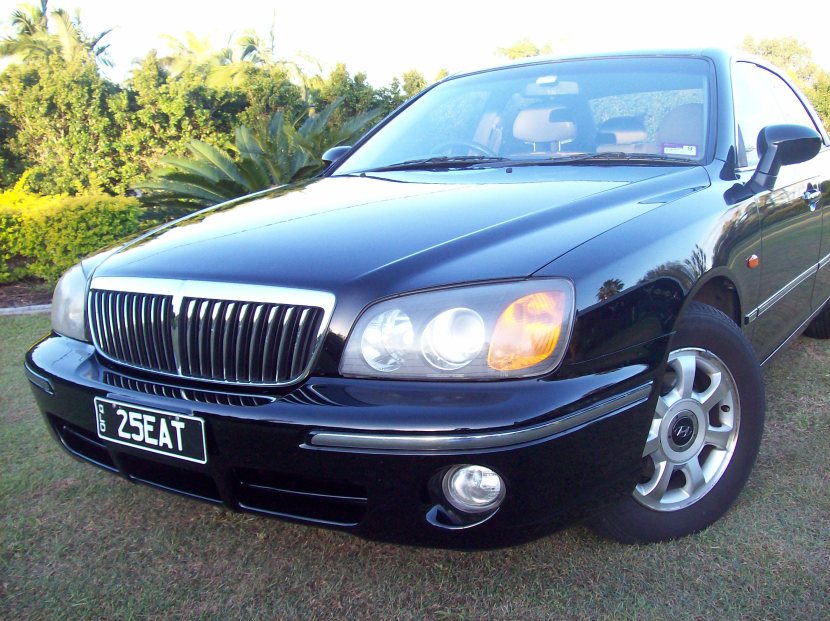
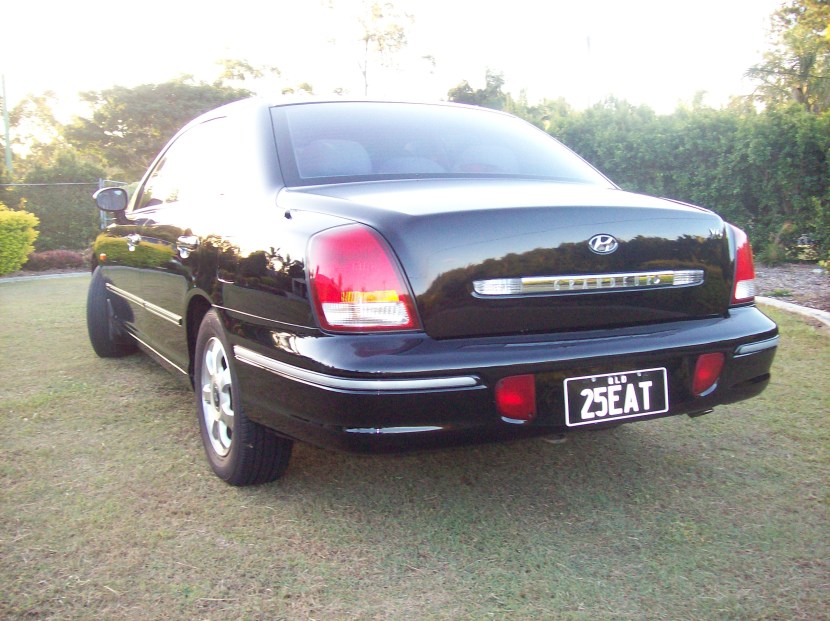
For me, a car equipped with gadgets, leather, smooth V6 and a large silver grille were reasons to buy the car – and the critics moaning about soft suspension just made the Grandeur sound more like a Korean Rolls Royce. So in 2008 I bought one.
The car was advertised as recently having had an engine problem, that was fixed by Hyundai under its warranty. This might have scared off some buyers, but for me it said the car’s engine had been overhauled by the maker, and was an even better buy. Plus it was black, and if you want to emulate the Lincoln Town Car that you see in all the American TV shows, then you need a large black car.
So for $5,500, a car that had cost close to $40,000 8 or so years earlier was in my driveway – the Grandeur XG. And it had around 185,000kms on the clock.
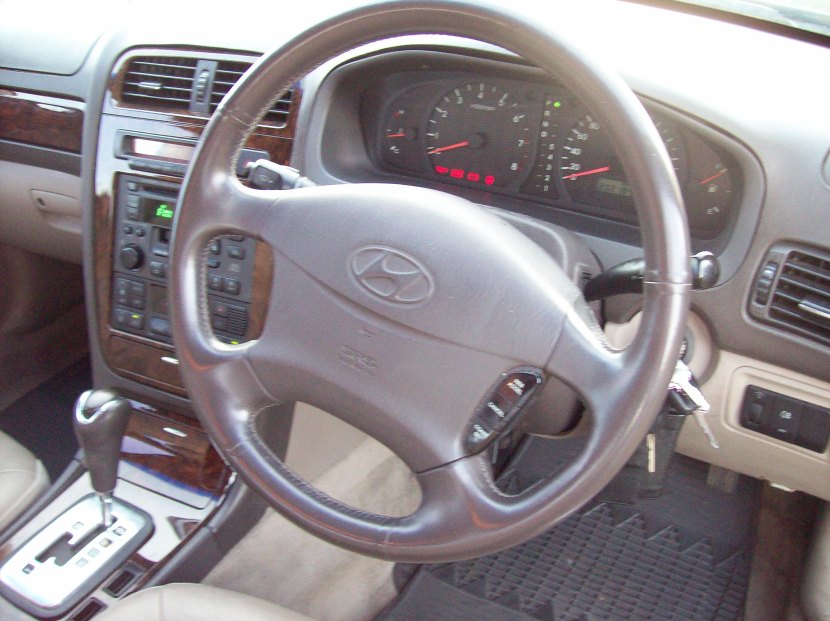 Inside was a nice place – electric leather seats with 2 driver memory, auto that you could drive like a manual, climate control aircon, cruise control, great stereo and fake woodgrain all felt special – in a “pity the person who paid 40k for this, but look what I’ve got to play with” kind of way.
The Grandeur did have its luxury features, but being from Hyundai it also had plenty of faux luxury – apart from the “woodgrain”, the armrests on the doors were covered in vinyl – not leather – so by this time they had begun to crack. However the leather seats were still good.
Image, they say, is everything.. and the Grandeur certainly got noticed. The guy at the video store (long since gone, thanks Netflix!) watched me park outside, and was absolutely floored when I told him what it had cost. Maybe he thought it was like a Chrysler 300C?
I enjoyed driving this land yacht on the Bruce Highway for the school pickup at the time. Going over speedbumps was not a chore – in fact, often the suspension meant the bumps weren’t even noticed!
After a year or so, my work changed and I would have to be travelling into the city every day – so a V6 was not going to be a practical choice for 1 hour+ of driving each way. So, the Grandeur went on eBay, and found a new owner. I did notice the buyer later bought an engine computer for this model, so maybe he wanted to “chip” it to improve performance, or the computer that was in the car fried itself.
I went from pomp and Grandeur to a “smarter” alternative (see other post). But I do miss that grille and that shapely boot, long before anyone had heard of the Kardashians.
“I am so Smart, S-M-R-T”
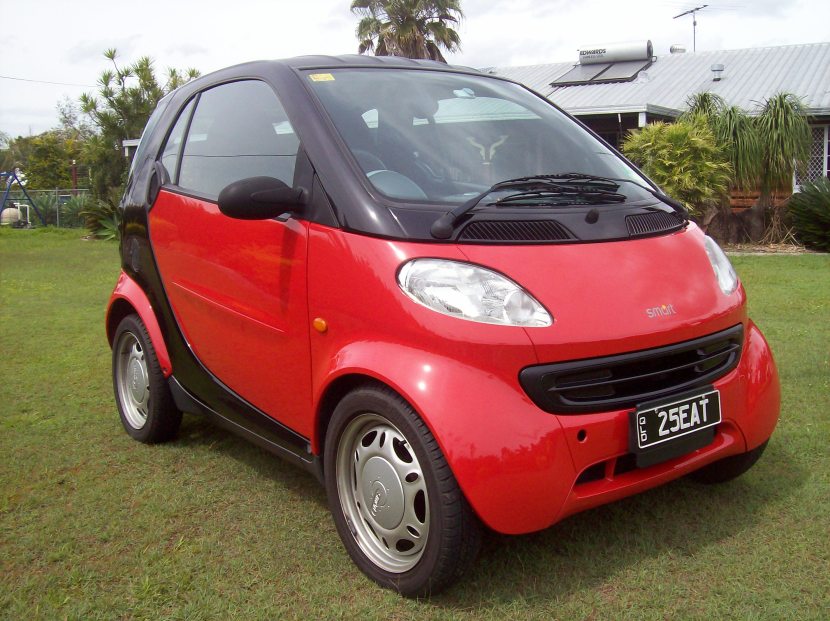
Like Homer Simpson, the Smart car looks funny, sounds funny, and even drives funny – but you just know that underneath that round colourful exterior, there’s some real heart – and it’s just as much of a cartoon as the outside is.
My introduction to Smart cars was with an early 2000s 598cc City Coupe model, imported as a used “Kei class” car from Japan. I could never afford the Australian-sold Smarts in 2009, so for $8,000 this was a cheap way to get into a car I’d long admired. The first, almond-shaped headlight model was never sold new in Australia. It didn’t have the glass roof of the local model.
So I took the 8-grand (in cash, in my pocket!) to the Gold Coast on the train, and picked up what was by then probably a third-hand Smart, that I’d bought sight unseen on eBay. It had flawless, plastic exterior panels painted red, and the black metal “safety cell” was also in good nick. The interior had some signs of wear on the grey plastic and seats, but overall I was happy with my purchase, after I pulled over in a quiet street to figure out how the hell to operate it! A sticker in Japanese above the gearstick was no help whatsoever.. It turned out the car was a clutchless manual – so you could drive it as a manual, or just leave it in gear and it would do the changing (albeit very slowly), with no clutch pedal to worry about.
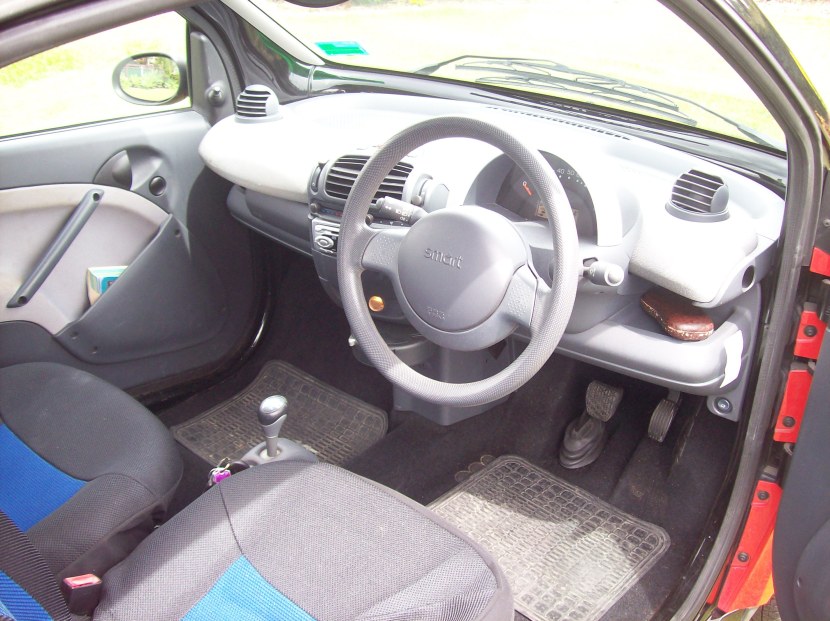
Driving it home, the Smart’s 0.6 of a litre engine sat happily on 110, but the wheels were another matter. These small, skinny tyres (skinnier than the Oz-spec model) bounced around a little on bumps, and a passing semi could set you on a different course, if you didn’t keep a firm hand on the steering wheel. The Pine Rivers bridge on the Bruce Highway was always a “fun” crossing in the time I owned the car, due to the strong crosswinds there. Around the suburbs, the car was a hoot to drive – like a comically tall go-kart.
I hit the internet on how to look after the Smart, and discovered that the tiny engine (stored below a panel in the rear of the car) really needed to have the oil changed every 5,000kms to avoid damage from over-cooked synthetic. Thankfully, an internet video showed how easy it was – if you had an oil sucker. Oil sucker you say? This little car didn’t have the little thing that most every car has – a sump plug to drain out the oil. So $65 dollars later, I was the owner of an oil sucker, and I proceeded to change the oil and filter (and renew with good synthetic oil) every 5,000kms – via the dipstick hole. It only took a few minutes really – but you have to get down on the ground to grasp the tiny oil filter.

It was a lot of fun to own (had the ignition key down between the two front seats, and a drop-down tailgate to load shopping in the rear) but it wasn’t without its faults: many Smarts develop tiny cracks in the plastic around the back window or windscreen, so if they’re kept outside in the rain you can find water pooling in the footwell when you hop in (thankfully mine was kept in the garage, so it only had a bit of water get in when I washed it).
I did sell it in 2011 – partly because I was worried the engine would eventually need an expensive repair. I had no reason to think this was going to happen, but people on the internet said it would happen, one day. Smart’s three cylinder engine is not known for being particularly durable if you don’t change the oil often (and I didn’t know this one’s history). It is known for being difficult to repair, often needing a rebuild or replacement.
I sold it to a middle-aged lady from the Sunshine Coast, who fell in love with it – or at least I thought she had. Just a few weeks after seeing it drive off, I noticed the Smart offered for sale on eBay – for less than what I’d sold it for. I suspect a drive on the Bruce Highway with those semis on the prowl, made her change her mind about owning it. I should have bought it back, or not sold it in the first place: clearly to this Homer of a car, I was Marge.
UPDATE: in July 2023 I bought a 2006 ForTwo with a whale/dog wrap on it.

This Smart had previously been owned by a Lennox Head real estate agent. It ran great, but would not move. A new clutch got it back on the road.

 Classic and Clunker