Cars fuelled by foreign language
William the Conqueror winning the Battle of Hastings in 1066 changed the English language. French was then used in courts and by aristocrats, with new words like “mutton” and “beef” filtering down from those aristocrats to everyday people, who had formerly said “sheep” and “cow”.
William had a fair bit of horsepower behind him – believed to be around 3,000 battle horses – but single cars today have eclipsed that. However, English speakers are still using foreign words with cars, nearly a thousand years after William started changing the language.
HECKBLENDE
I first heard of the German word “heckblende” when co-founder of The Autopian, Jason Torchinsky, wrote about it on his former website. It’s the reflective plastic panel which sits between a car’s rear taillights, which makes it seem that the taillight is one continuous unit across the rear. I might have previously called it a “garnish” – but heckblende sounds heck cooler.

Google translates heckblende from German as “rear cover”, which is fair as it’s not a lit-up unit, like so many cars now feature with LED strips across the back.
I have a heckblende on my 1985 Subaru XT Vortex and I even bought a spare one from a wrecking yard for $20 this week, to take it off eBay after it was ‘parked’ there for months. There’s not much call for an 80s Subaru heckblende Down Under, even thought we like a bit of ‘garnish’ on a schnitty.
QUATTROPORTE
There I was, thinking “Quattroporte” was some reference to Maserati valves, powertrain or its affordability multiple. However the name, translated from Italian, means “four doors”.
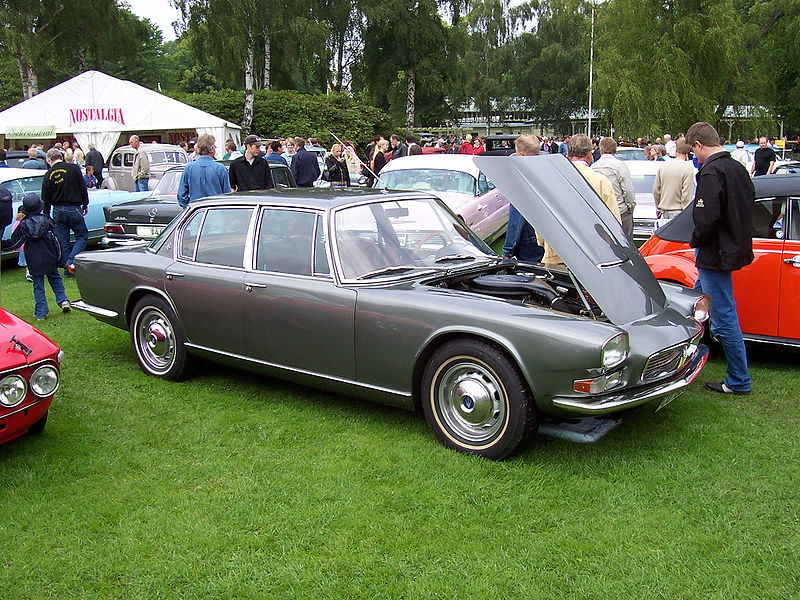
Maserati wanted a product to complement its coupes and spyders. The Quattroporte made its debut in 1963 with four doors and a 4.2 litre V8. It walked out the door last year, but could be back for 2025.
Plus, if you cut off the “porte”, you’re left with “quattro” and of course Audi has been using that naming and concept for decades now.
KAMMBACK
Harking back to Germany, and the “kammback” (or Kamm Tail as it’s also known) was a way to exploit the teardrop shape for car aerodynamics, without keeping the naturally long tail of the teardrop.
As MotorTrend writes, in 1938 German engineer and aerodynamicist Wunibald Kamm designed a BMW with a flat, vertical surface at the sloping rear. BMW called the car the “Kamm Coupe”, and eventually the kammback name stuck.
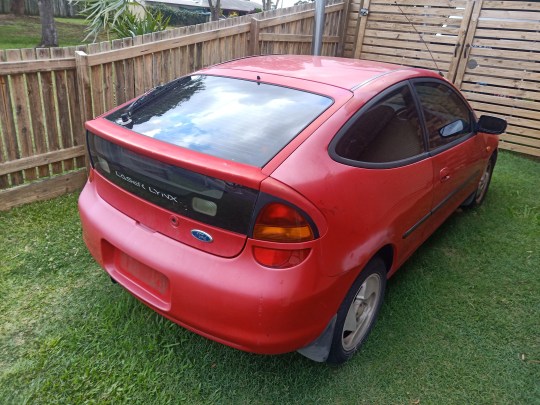
In 2021, I bought a car with a see-through kammback: the Ford Laser Lynx. It was made in Japan by Mazda and sold elsewhere in the world as the Familia Neo or 323C. With the kammback starting from a higher point, it didn’t suffer too much from the rear headroom restrictions that this design can create.
MITSUBISHI
Shifting focus to Japan, and we’ve all been speaking Japanese for decades without knowing it.

The brand name Mitsubishi literally means three diamonds – or water chestnuts if you go back far enough.
Here’s how the Mitsubishi website explains it:
“Mitsu means “three.” Hishi means “water chestnut,” and Japanese have used the word for a long time to denote a rhombus or diamond shape. In Japanese, the “h” sound is often pronounced as a “b” when it occurs in the middle of a word. So they pronounce the combination of mitsu and hishi as mitsubishi.”
In other Japanese words to be adopted by English speakers, you’d have to include “Kei” to cover any small car, produced to strict regulations for the Kei class on Japanese roads.
PAJERO
Turns out, we’ve all been swearing about Mitsubishis for over 40 years. The Pajero was launched in 1982 as a four-wheel-drive, just as family off-roading became a thing.
Over four generations, 3.25 million Pajeros were made, with production ending in 2021. To the English-speaking world, the Pajero was a mostly trusty name with Dakar Rally wins.

However, in Spanish “Pajero” is more about a rough ride, by yourself. It translates to “wanker”, so the model was renamed the Montero in some markets.
And let’s clear this up: Snopes rules out the story that General Motors had trouble selling the Nova model in Central America, because “no va” means “doesn’t go” in Spanish. Snopes says the car name is pronounced differently.
As the child of an affair, William the Conqueror was known for much of his life as “William the Bastard”. But as he arrived at Hastings in his Viking-style vessel – at least he didn’t drive a Pajero.
 Classic and Clunker